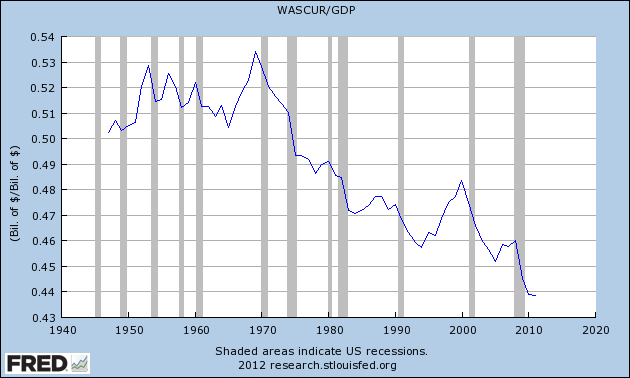
Barry, My Liege :
'A public utility, or utility, is an organization that maintains the infrastructure for a public service (often also providing a service using that infrastructure). Public utilities are subject to forms of public control and regulation ranging from local community-based groups to state-wide government monopolies.' [wikipedia]
Public services regulated as monopolies in the United States have included water, sewer, electricity, natural gas, highways and roads, telephone and telegraph, airlines and railroads.
Often the service provided by the utility is a monopoly or oligopoly for a variety of reasons. One reason can be capital requirements : Perhaps the provision of the service requires huge capital investments such that the service provider could not attract the capital required to provide the service without a guarantee of returns to the capital providers. The guarantee is usually in the form that the provider will be insulated from competition.
Regardless of the reason for achieving or granting such monopolies or oligopolies, the effect is that the providers have such enormous power over customers that there is a great temptation to achieve monopoly profits by pricing the product or service at a higher price than would obtain in a competitive marketplace.
Monopoly profits can occur whether the industry is a monopoly or not. The test is whether the firm faces a sloping demand curve and can achieve monopoly-style profits by raising the price above and reducing the quantity sold below a competitive equilibrium.
If monopolies and oligopolies are allowed to earn monopoly style profits, the result will be greater inefficiencies in the market place and a transfer of significant portions of consumer surplus to monopoly profits; the effect would be to reduce middle class incomes further.
A common solution to this problem is to regulate the utility carefully so that it has the ability to earn a sufficient return to attract capital but is prevented from usurping consumer surplus into monopoly profits.
For example, many communities have Public Utility Commissions which regulate the pricing and practices of utilities. These are elected bodies which have the power to approve or reject rate changes and capital investments. This concept has been recognized in the United States for more than 100 years; for example, a Public Utility Commission was established as part of the Colorado Constitution adopted in 1876 as 2.26 ARTICLE XXV. Public Utilities.
When left to function in the public interest, these commissions frequently succeed in pricing the service close to what a competitive market might establish.
When that occurs, the public interest is served since the Utility is prevented from achieving monopoly profits.
In today's economy there are numerous examples of monopolies and oligopolies which do secure monopoly profits but are not regulated to prevent that occurrence.
My Liege, I think it is time to expand the number of industries subject to Public Utility Commission style regulation. Such an extension would reduce the accumulation of monopoly profits and the consequent reduction of middle class purchasing power. By that mechanism, we would see additional economic growth springing from an increase in middle class buying power.
And, I suggest we extend the candidates for such Public Utility Commission style regulation to include industrial products as well.
Utilities should include industries in which the final product or service is used by more than one third of the households AND in which the four firm concentration ratio exceeds 60%. Such a calculation will be allowed for city, county, and state as well as national public utility designations.
When considering industrial products which are not sold directly to households but are raw materials or components of other products, then we should consider only the concentration ratio. Whenever the revenues of the top four firms in such an industry exceeds say 70% of the total industry revenues, then the industry should be deemed a utility and a Public Utility Commission should be assigned to regulate it.
By adopting such a course, the United States of America will strengthen its Economic National Security by reducing the power of some monopolies and oligopolies to accumulate capital and by transfering some of that capital to consumers in the form of lower prices and greater access to products and services.
Your faithful servant,
Tuesday, June 5, 2012


Friday, June 1, 2012
Spring Country Studies
Barry, My Liege :
The McKeever Institute of Economic Policy Analysis [MIEPA] is pleased to announce the publication on its website [www.mkeever.com] of detailed studies of the economic policies of the United States of America, Colombia, Mexico, Korea, Hong Kong, China, Iran, Romania, Czech Republic, India and Japan.
Three countries which have not been previously analyzed by Specialists are submitted :
Colombia is analyzed by Specialist Daniel Guasca - http://www.mkeever.com/colombia.html
The Czech Republic is analyzed by Specialist Lucie Wittichovia - http://www.mkeever.com/czech.html
Romania is analyzed by Specialist Iulian Georgescu - http://www.mkeever.com/romania.html
Additionally, eight countries have been newly analyzed by Specialists:
China is analyzed by three Specialists : Junfeng Li, Michael H. and Amanda Z. - http://www.mkeever.com/china.doc
Hong Kong is analyzed by three Specialists : Waihong Wong, Kam Tung Wong and Lewis Chan - http://www.mkeever.com/hongkong.html
India is analyzed by Specialist Tasha Agarwal - http://www.mkeever.com/india.html
Iran is analyzed by Specialist Arash Sarabi - http://www.mkeever.com/iran.html
Japan is analyzed by Specialist Nanako Fuku - http://www.mkeever.com/japan.html
Korea is analyzed by Specialist Sung A. Park - http://www.mkeever.com/korea.html
Mexico is analyzed by Specialist Damaris Ortiz - http://www.mkeever.com/mexico.html
The United States is analyzed by six specialists : Sophia Gee, Kelley Carroll, Christopher Baldonado, Christian Daria, Noel Acasio and Edna Lin - http://www.mkeever.com/usa.html
Best regards,
Mike P. McKeever
MIEPA
www.mkeever.com
The McKeever Institute of Economic Policy Analysis [MIEPA] is pleased to announce the publication on its website [www.mkeever.com] of detailed studies of the economic policies of the United States of America, Colombia, Mexico, Korea, Hong Kong, China, Iran, Romania, Czech Republic, India and Japan.
Three countries which have not been previously analyzed by Specialists are submitted :
Colombia is analyzed by Specialist Daniel Guasca - http://www.mkeever.com/colombia.html
The Czech Republic is analyzed by Specialist Lucie Wittichovia - http://www.mkeever.com/czech.html
Romania is analyzed by Specialist Iulian Georgescu - http://www.mkeever.com/romania.html
Additionally, eight countries have been newly analyzed by Specialists:
China is analyzed by three Specialists : Junfeng Li, Michael H. and Amanda Z. - http://www.mkeever.com/china.doc
Hong Kong is analyzed by three Specialists : Waihong Wong, Kam Tung Wong and Lewis Chan - http://www.mkeever.com/hongkong.html
India is analyzed by Specialist Tasha Agarwal - http://www.mkeever.com/india.html
Iran is analyzed by Specialist Arash Sarabi - http://www.mkeever.com/iran.html
Japan is analyzed by Specialist Nanako Fuku - http://www.mkeever.com/japan.html
Korea is analyzed by Specialist Sung A. Park - http://www.mkeever.com/korea.html
Mexico is analyzed by Specialist Damaris Ortiz - http://www.mkeever.com/mexico.html
The United States is analyzed by six specialists : Sophia Gee, Kelley Carroll, Christopher Baldonado, Christian Daria, Noel Acasio and Edna Lin - http://www.mkeever.com/usa.html
Best regards,
Mike P. McKeever
MIEPA
www.mkeever.com
Recovery : National Industrial Policy
Barry, My Liege :
An economic policy is any law, regulation or practice through which citizens and companies can find profit opportunities or can be taxed or harmed. Considered as such, policies can be national, state or local, but usually attention is paid to policies at the national level because they have the greatest impact.
When considered in this fashion, it is clear that we already have a national industrial policy.
But, our existing national policy has been developed in a haphazard manner and does not protect our Economic National Security adequately.
For example, it can be argued that our existing industrial policy calls for exporting manufacturing jobs, sustaining a large trade deficit, transferring technology to foreign companies regardless of the effect on our domestic economy and allowing a privileged class of bankers to speculate in a variety of markets while under the protection of government sponsored insurance against failure.
My Liege, that does not make sense.
Other countries like Japan, China, Korea and Germany have created a conscious industrial policy with some effect in creating a better economy for their citizens.
It is time that we emulated those successful countries. Our future Economic National Security requires it.
It will be a serious undertaking, however, since it will involve changing some powerful economic sectors. We can predict that any industry or influence which seems threatened by economic change will mount a strong campaign against change.
And yet, our future depends on it.
As an example of how such a policy might appear, here is a description of the Japanese policy from POLITICS AND PRODUCTIVITY : HOW JAPAN'S DEVELOPMENT STRATEGY WORKS, Chalmers Johnson, Laura D'Andrea Tyson, and John Zysman, Harpercollins (January 1991) :
'The allocation of resources among industries and activities can be evaluated not only according to its Ricardian efficiency but also according to two other performance criteria:
1. Its growth efficiency or its effects on long-term rates of growth of economic activity
2. Its Schumpeterian efficiency or its effects on the pace and direction of technological change.
These two criteria clearly dominated Japanese economic policymaking in a self-conscious way. Japanese industrial policy targeted industries and activities that appeared to the Japanese planners to have the greatest future growth potential and the greatest technological potential over the long run.
As Freeman argues in his insightful book on Japanese technology policy, "MITI saw as one of its key functions the promotion of the most advanced technologies with the widest world market potential in the long run ."
Under conditions of imperfect competition and technological change, an allocation of resources that is Ricardian efficient-in other words, efficient by current market indicators-may not be efficient in the growth or Schumpeterian sense.'
When we think about an Industrial policy for the United States, we recognize that it will be a huge undertaking because we have such a large and diversified economy.
Here are some things to consider:
** Encouraging oil replacement technologies to reduce dependence on foreign oil supplies is a natural
** Auto manufacturing industry is a great job creator and a success for Federal intervention
** Reducing or eliminating our BOP deficit will save many jobs in the USA
** We should not do obvious acts which can harm our military strength or increase the military strength of our potential adversaries - we should not sell missiles to Iran, for example
Mostly, let us recognize that mistakes will be made as we move forward, but the biggest mistake is to do nothing.
As the sage Yogi Berra said : 'You've got to be very careful if you don't know where you're going because you might not get there.'
Your faithful servant,
An economic policy is any law, regulation or practice through which citizens and companies can find profit opportunities or can be taxed or harmed. Considered as such, policies can be national, state or local, but usually attention is paid to policies at the national level because they have the greatest impact.
When considered in this fashion, it is clear that we already have a national industrial policy.
But, our existing national policy has been developed in a haphazard manner and does not protect our Economic National Security adequately.
For example, it can be argued that our existing industrial policy calls for exporting manufacturing jobs, sustaining a large trade deficit, transferring technology to foreign companies regardless of the effect on our domestic economy and allowing a privileged class of bankers to speculate in a variety of markets while under the protection of government sponsored insurance against failure.
My Liege, that does not make sense.
Other countries like Japan, China, Korea and Germany have created a conscious industrial policy with some effect in creating a better economy for their citizens.
It is time that we emulated those successful countries. Our future Economic National Security requires it.
It will be a serious undertaking, however, since it will involve changing some powerful economic sectors. We can predict that any industry or influence which seems threatened by economic change will mount a strong campaign against change.
And yet, our future depends on it.
As an example of how such a policy might appear, here is a description of the Japanese policy from POLITICS AND PRODUCTIVITY : HOW JAPAN'S DEVELOPMENT STRATEGY WORKS, Chalmers Johnson, Laura D'Andrea Tyson, and John Zysman, Harpercollins (January 1991) :
'The allocation of resources among industries and activities can be evaluated not only according to its Ricardian efficiency but also according to two other performance criteria:
1. Its growth efficiency or its effects on long-term rates of growth of economic activity
2. Its Schumpeterian efficiency or its effects on the pace and direction of technological change.
These two criteria clearly dominated Japanese economic policymaking in a self-conscious way. Japanese industrial policy targeted industries and activities that appeared to the Japanese planners to have the greatest future growth potential and the greatest technological potential over the long run.
As Freeman argues in his insightful book on Japanese technology policy, "MITI saw as one of its key functions the promotion of the most advanced technologies with the widest world market potential in the long run ."
Under conditions of imperfect competition and technological change, an allocation of resources that is Ricardian efficient-in other words, efficient by current market indicators-may not be efficient in the growth or Schumpeterian sense.'
When we think about an Industrial policy for the United States, we recognize that it will be a huge undertaking because we have such a large and diversified economy.
Here are some things to consider:
** Encouraging oil replacement technologies to reduce dependence on foreign oil supplies is a natural
** Auto manufacturing industry is a great job creator and a success for Federal intervention
** Reducing or eliminating our BOP deficit will save many jobs in the USA
** We should not do obvious acts which can harm our military strength or increase the military strength of our potential adversaries - we should not sell missiles to Iran, for example
Mostly, let us recognize that mistakes will be made as we move forward, but the biggest mistake is to do nothing.
As the sage Yogi Berra said : 'You've got to be very careful if you don't know where you're going because you might not get there.'
Your faithful servant,
Saturday, May 26, 2012
Pre-Publication : IRAN
Barry, My Liege :
MIEPA is proud to announce that the detailed economic analysis of IRAN has been updated by native Iranian Arash Sarabi and is now available for viewing at this link: http://www.mkeever.com/iran.html
While several other country economic analyses are in preparation and will be published shortly, MIEPA is providing this unusual preview because of the sensitive nature of relations with Iran at this time.
Your faithful servant,
MIEPA is proud to announce that the detailed economic analysis of IRAN has been updated by native Iranian Arash Sarabi and is now available for viewing at this link: http://www.mkeever.com/iran.html
While several other country economic analyses are in preparation and will be published shortly, MIEPA is providing this unusual preview because of the sensitive nature of relations with Iran at this time.
Your faithful servant,
Monday, May 21, 2012
NSA - Inadmissible, But.....
Barry, My Liege :
As little as I know about the law, one thing seems clear : evidence gathered from illegal search and seizure is inadmissible in a court of law.
So, my conclusion is that all the information our spooks steal from us cannot be used against us in the courts.
It has the same standing as a conversation with a stool pigeon who won't testify in open court.
It means the police have to prove it before they can use it.
Unfortunately, My Liege, those protections have been seriously weakened by your executive extra-judicial powers.
The courts are powerless to protect me from you or your subordinates.
I am not secure from those who control the United States government ; and, I do not think that voters control the government.
Your faithful servant,
As little as I know about the law, one thing seems clear : evidence gathered from illegal search and seizure is inadmissible in a court of law.
So, my conclusion is that all the information our spooks steal from us cannot be used against us in the courts.
It has the same standing as a conversation with a stool pigeon who won't testify in open court.
It means the police have to prove it before they can use it.
Unfortunately, My Liege, those protections have been seriously weakened by your executive extra-judicial powers.
The courts are powerless to protect me from you or your subordinates.
I am not secure from those who control the United States government ; and, I do not think that voters control the government.
Your faithful servant,
Friday, May 18, 2012
Recovery : Great Fortunes, Great Incomes
Barry, My Liege :
The accumulation of great fortunes and large incomes in the United States has a deleterious effect on economic growth and job creation.
Economic growth and job creation comes from people who invest in businesses. It is well known that business investing is risky.
'Of all the new business startups, 1/3 eventually turn a profit, 1/3 break even, and 1/3 never leave a negative earnings scenario. According to a study by the U.S. Small Business Association, only 2/3 of all small business startups survive the first two years and less than half make it to four years', [http://www.gaebler.com]
And, since most jobs are created in small businesses, then it follows that economic growth and job creation requires risky investments.
People who create large fortunes are mostly interested in preserving their capital. They become risk averse as their fortunes become larger. They do not want to invest in risky businesses.
This was first recognized by Keynes in his description of the Marginal Efficiency of Capital. In Keynes' graph, the Marginal Efficiency of Capital is a negatively sloped cuve where higher returns are associated with lower capital amounts and lower returns are associated with higher capital amounts. In the graph the vertical axis represents percentage returns, the horizontal axis represents the dollar amount of capital and the MEC line represents the downward to the right sloping, negatively sloped curve of actual investments made.

We can see this demonstrated through classifying some investments as low risk and some as high risk in the United States today.
HIGH RISK INVESTMENTS ARE COMPARATIVELY SMALL - The total amount invested annually in venture capital business start ups and expansions, which are high risk, high profit investments is about $250 billion per year.
SAFE INVESTMENTS HAVE HIGHER DOLLAR TOTALS - At the other extreme, the value of United States Treasury bills is now about $15 trillion with some one or two trillion added each year. T-Bills are widely regarded as the safest investment in the world and are now paying about 2%.
All the gold mined in the world by 2009 was about 165,000 tons with a value of about 10 trillion dollars at $1,900 per ounce. Of that, some 19% is held by central banks as currency reserves.
The total valuation of homes in the United States is about $ 9 trillion after the price meltdown of the last few years. Residential real estate is usually considered a safe investment.
Commercial real estate is also considered a safe investment although somewhat more risky than houses. It is also worth about $ 9 trillion.
Although somewhat more risky than T-Bills, the NYSE is considered a safer investment than new business start ups for a number of reasons. The total valuation of all the companies on the NYSE is about $ 15 trillion.
In conclusion, My Liege, it is clear both theoretically and practically that people with large incomes and fortunes do not wish to invest in busines start-ups. Any activity that increases already large fortunes will take money away from people wishing to start new businesses, thus reducing economic growth and the Economic National Security of the United States.
Your faithful servant,
The accumulation of great fortunes and large incomes in the United States has a deleterious effect on economic growth and job creation.
Economic growth and job creation comes from people who invest in businesses. It is well known that business investing is risky.
'Of all the new business startups, 1/3 eventually turn a profit, 1/3 break even, and 1/3 never leave a negative earnings scenario. According to a study by the U.S. Small Business Association, only 2/3 of all small business startups survive the first two years and less than half make it to four years', [http://www.gaebler.com]
And, since most jobs are created in small businesses, then it follows that economic growth and job creation requires risky investments.
People who create large fortunes are mostly interested in preserving their capital. They become risk averse as their fortunes become larger. They do not want to invest in risky businesses.
This was first recognized by Keynes in his description of the Marginal Efficiency of Capital. In Keynes' graph, the Marginal Efficiency of Capital is a negatively sloped cuve where higher returns are associated with lower capital amounts and lower returns are associated with higher capital amounts. In the graph the vertical axis represents percentage returns, the horizontal axis represents the dollar amount of capital and the MEC line represents the downward to the right sloping, negatively sloped curve of actual investments made.

We can see this demonstrated through classifying some investments as low risk and some as high risk in the United States today.
HIGH RISK INVESTMENTS ARE COMPARATIVELY SMALL - The total amount invested annually in venture capital business start ups and expansions, which are high risk, high profit investments is about $250 billion per year.
SAFE INVESTMENTS HAVE HIGHER DOLLAR TOTALS - At the other extreme, the value of United States Treasury bills is now about $15 trillion with some one or two trillion added each year. T-Bills are widely regarded as the safest investment in the world and are now paying about 2%.
All the gold mined in the world by 2009 was about 165,000 tons with a value of about 10 trillion dollars at $1,900 per ounce. Of that, some 19% is held by central banks as currency reserves.
The total valuation of homes in the United States is about $ 9 trillion after the price meltdown of the last few years. Residential real estate is usually considered a safe investment.
Commercial real estate is also considered a safe investment although somewhat more risky than houses. It is also worth about $ 9 trillion.
Although somewhat more risky than T-Bills, the NYSE is considered a safer investment than new business start ups for a number of reasons. The total valuation of all the companies on the NYSE is about $ 15 trillion.
In conclusion, My Liege, it is clear both theoretically and practically that people with large incomes and fortunes do not wish to invest in busines start-ups. Any activity that increases already large fortunes will take money away from people wishing to start new businesses, thus reducing economic growth and the Economic National Security of the United States.
Your faithful servant,
Monday, May 14, 2012
UPDATE - TRAPWIRE , NSA Records, Keeps All US Calls, Emails
Barry, My Liege:
The NSA collects and saves every telephone call and email made by every United States citizen and does so without a warrant and in direct violation of the US Constitution.
The operation is called TRAPWIRE, and you can read about it here :
http://rt.com/usa/news/trapwire-abraxas-cubic-surveillance-251/
And here : http://www.nytimes.com/2012/08/23/opinion/the-national-security-agencys-domestic-spying-program.html
The people who reported this have been deemed 'enemies of the state'. These American heroes are William Binney, Kirk Wiebe and Thomas Drake.
See a video of their discussion here: http://current.com/shows/viewpoint/videos/nsa-whistleblowers-warn-of-secret-spying-programs-that-can-target-anyone/
The 'data' remains available for any law enforcement official to request at any time in the future. That is the purpose of the Colorado data center - to warehouse our calls and emails so they will be available in case we become an 'enemy of the state' someday.
England is proposing the same thing: http://www.huffingtonpost.com/2012/05/18/uk-surveillance-law_n_1527145.html
Your faithful servant,
The NSA collects and saves every telephone call and email made by every United States citizen and does so without a warrant and in direct violation of the US Constitution.
The operation is called TRAPWIRE, and you can read about it here :
http://rt.com/usa/news/trapwire-abraxas-cubic-surveillance-251/
And here : http://www.nytimes.com/2012/08/23/opinion/the-national-security-agencys-domestic-spying-program.html
The people who reported this have been deemed 'enemies of the state'. These American heroes are William Binney, Kirk Wiebe and Thomas Drake.
See a video of their discussion here: http://current.com/shows/viewpoint/videos/nsa-whistleblowers-warn-of-secret-spying-programs-that-can-target-anyone/
The 'data' remains available for any law enforcement official to request at any time in the future. That is the purpose of the Colorado data center - to warehouse our calls and emails so they will be available in case we become an 'enemy of the state' someday.
England is proposing the same thing: http://www.huffingtonpost.com/2012/05/18/uk-surveillance-law_n_1527145.html
Your faithful servant,
Sunday, May 13, 2012
Recovery : Free Trade
Barry, My Liege :
The structure of these few remarks is to provide some of the evidence supporting each of my specific suggestions for improving the Economic National Security of the United States that were listed in the posting of April 27, 2012 titled : 'Presidential Elections and Economic National Security'.
Each such remark is fronted in the title by the word 'Recovery'.
This posting is 'Recovery : Free Trade'
Free Trade Doesn't Work ; it's a fact and it's also the title of a book by Ian Fletcher [http://www.freetradedoesntwork.com/].
Trade policy in the United States of America has been wedded to the idea of Free Trade since the 1950's.
One of the justifications for Free Trade and low tariffs for the USA was that we could promote industry in other countries by opening our consumer and industrial markets to the world.
Since the USA emerged from World War 2 as the world's major industrial power, we could afford to, we had an obligation to and our security was made stronger by raising living standards in other countries.
Since then many countries have developed strong economies by protecting their domestic companies and exporting products to the USA : China, Korea, Japan, etc., etc.
Due to their success, our relative economic strength has declined significantly to the point where our economy is now the first among equals instead of the acknowledged leader ; further, we are tied together with the other industrialized countries in an electronic embrace that we cannot break.
The time has come to abandon that policy and conduct our trade policy with attention to the real world and not to the theoretical world constructed in the 1700's.
Make no mistake, trade with other countries can promote our Economic National Security if it is managed carefully. Equally it can damage our security if it is left to market forces.
I will be more than happy to debate any economist or politician on the theory of the subject, but this is not the forum for that technical debate. You can read my short discussion of trade theory and the theory of Comparative Advantage here : http://www.mkeever.com/compad.doc
It is sufficient here to offer an estimate of the harm done to our economy by our recent and overwhelmingly negative trade balances.
By the term 'negative trade balances' I refer to the monthly and annual difference in current dollars between the exports of goods and services from the USA to other countries and the imports of goods and services to the USA from other countries as published by the US Census Bureau, Foreign Trade Division. This number is known as the Balance of Payments or BOP.
The BOP for the United States was either a small positive number - meaning the total dollar value of our exports exceeded the dollar value of our imports - or a small negative number until the mid 1980's.
In 1984, the BOP of the United States exceeded a NEGATIVE $100 BILLION for the first time. That means that in 1984 we bought $109.1 BILLION more of stuff from other countries than we sold to them.
In monetary policy terms that means that our money supply was REDUCED by $109.1 BILLION in that year.
BUT, with the deposit money multiplier, it means that our GDP was reduced by about ONE TRILLION DOLLARS in 1984 alone. In that year, the GDP in current dollars was about Four Trillion Dollars.
SO, our GDP could have been reduced by about 20% in 1984 alone.
While there is some debate as to whether all that money was taken permanently from our domestic money supply and GDP or whether some of it was returned to the USA and used to buy T-bills, there is no doubt that the GDP reduction is significant.
Barry, My Liege, that is just 1984.
We have consistently run a negative BOP ever since then.
Between 1984 and 2009, our cumulative NEGATIVE BOP was 7.3 TRILLION DOLLARS.
Using a conservative money multiplier of 10, that means our GDP was REDUCED by about SEVENTY TRILLION DOLLARS during the period.
In simple terms, My Liege : We are not so rich we can afford to lose such substantial GDP every year to foreign trade.
Unless this problem is corrected, it will bankrupt the United States of America.
Your faithful servant,
The structure of these few remarks is to provide some of the evidence supporting each of my specific suggestions for improving the Economic National Security of the United States that were listed in the posting of April 27, 2012 titled : 'Presidential Elections and Economic National Security'.
Each such remark is fronted in the title by the word 'Recovery'.
This posting is 'Recovery : Free Trade'
Free Trade Doesn't Work ; it's a fact and it's also the title of a book by Ian Fletcher [http://www.freetradedoesntwork.com/].
Trade policy in the United States of America has been wedded to the idea of Free Trade since the 1950's.
One of the justifications for Free Trade and low tariffs for the USA was that we could promote industry in other countries by opening our consumer and industrial markets to the world.
Since the USA emerged from World War 2 as the world's major industrial power, we could afford to, we had an obligation to and our security was made stronger by raising living standards in other countries.
Since then many countries have developed strong economies by protecting their domestic companies and exporting products to the USA : China, Korea, Japan, etc., etc.
Due to their success, our relative economic strength has declined significantly to the point where our economy is now the first among equals instead of the acknowledged leader ; further, we are tied together with the other industrialized countries in an electronic embrace that we cannot break.
The time has come to abandon that policy and conduct our trade policy with attention to the real world and not to the theoretical world constructed in the 1700's.
Make no mistake, trade with other countries can promote our Economic National Security if it is managed carefully. Equally it can damage our security if it is left to market forces.
I will be more than happy to debate any economist or politician on the theory of the subject, but this is not the forum for that technical debate. You can read my short discussion of trade theory and the theory of Comparative Advantage here : http://www.mkeever.com/compad.doc
It is sufficient here to offer an estimate of the harm done to our economy by our recent and overwhelmingly negative trade balances.
By the term 'negative trade balances' I refer to the monthly and annual difference in current dollars between the exports of goods and services from the USA to other countries and the imports of goods and services to the USA from other countries as published by the US Census Bureau, Foreign Trade Division. This number is known as the Balance of Payments or BOP.
The BOP for the United States was either a small positive number - meaning the total dollar value of our exports exceeded the dollar value of our imports - or a small negative number until the mid 1980's.
In 1984, the BOP of the United States exceeded a NEGATIVE $100 BILLION for the first time. That means that in 1984 we bought $109.1 BILLION more of stuff from other countries than we sold to them.
In monetary policy terms that means that our money supply was REDUCED by $109.1 BILLION in that year.
BUT, with the deposit money multiplier, it means that our GDP was reduced by about ONE TRILLION DOLLARS in 1984 alone. In that year, the GDP in current dollars was about Four Trillion Dollars.
SO, our GDP could have been reduced by about 20% in 1984 alone.
While there is some debate as to whether all that money was taken permanently from our domestic money supply and GDP or whether some of it was returned to the USA and used to buy T-bills, there is no doubt that the GDP reduction is significant.
Barry, My Liege, that is just 1984.
We have consistently run a negative BOP ever since then.
Between 1984 and 2009, our cumulative NEGATIVE BOP was 7.3 TRILLION DOLLARS.
Using a conservative money multiplier of 10, that means our GDP was REDUCED by about SEVENTY TRILLION DOLLARS during the period.
In simple terms, My Liege : We are not so rich we can afford to lose such substantial GDP every year to foreign trade.
Unless this problem is corrected, it will bankrupt the United States of America.
Your faithful servant,
Monday, May 7, 2012
Recovery : Monopoly, Revised with 2002 data
Barry, My Liege :
Monopolies and oligopolies are bad for the country simply because they exist.
These firms face a downward sloping demand curve for their products as opposed to a horizontal demand curve faced by a firm in competition.
This gives monopolies and oligopolistic firms the ability to change the price of the products. And, because all firms normally want to maximize profits, these firms will charge higher prices and sell a lower quantity than would all the firms in a competitive market.
Economists call the economic activity lost from this decision a 'Deadweight Loss' ; in other words it is economic activity lost forever from the economy.
Even worse is the ability and the practice of these firms to increase their profits at the expense of consumers.
In the graph below which shows the cost and revenue curves and decisions faced by a monopoly, the 'Deadweight Loss' is the pink area to the left of the intersection of the MC, AC and AR curves intersect. The point where those three curves intersect represents the point where there would be a competitive equilibrium or efficient price and production quantity.
Since the actual monopoly point of price is where the line labelled Pm intersects the AR line and the monopoly quantity is where the Qm line intersects the AR line, the loss of production and higher price represents the 'deadweight Loss.'
Further, the green area represents the area of consumer benefit that is transferred from consumers to the firm as 'Monopoly Profit'.

Thus, monopolies and oligopolies which act as monopolies increase their profits at the expense of the economy as a whole ; they are inefficient.
Would that it were just a graph, My Liege, but these actions take large amounts of income from consumers and transfer it to these companies.
Here is a list of industries in which companies earn these abnormal profits [the numbers after the name of the industry refer to the percentage share of total revenues for the industry earned by the four {4} largest firms] in 2002 :
Cigarettes 97.8
Guided Missiles 94.8
Aircraft 81.3
Breakfast cereal 80.4
Electric Lamps, Light Bulbs 75.4
Tires 77.6
Automobiles 67.6
Cookies, Crackers 69.3
Tortillas 57.4
Men's and Boy's Shirts 56.4
Dolls, Stuffed Toys 56.9
Fluid Milk 46.0
Ships, Boat Building 44.0
As a comparison, here are the industries and concentration ratios in 1997 :
Cigarettes 99
Cane Sugar Refining 99
Primary Copper 95
Glass Containers 91
Beer 90
Small-arms Ammunition 90
Electric Light Bulbs 89
Aircraft 85
Breakfast Cereals 83
Motor Vehicles 82
Household Refrigerators 82
Photo Equipment and Supplies 81
Turbines and Generators 78
Flat Glass 77
Fiber-Optic Cable 71
Men's Slacks 69
Tires 69
Motorcycles and Bicycles 68
Gypsum Products 68
Soap and Detergents 66
Lawn, Garden Equipment 64
Our economic recovery will be made more difficult until the concentration of monopoly profits is reduced or eliminated.
Your faithful servant,
Monopolies and oligopolies are bad for the country simply because they exist.
These firms face a downward sloping demand curve for their products as opposed to a horizontal demand curve faced by a firm in competition.
This gives monopolies and oligopolistic firms the ability to change the price of the products. And, because all firms normally want to maximize profits, these firms will charge higher prices and sell a lower quantity than would all the firms in a competitive market.
Economists call the economic activity lost from this decision a 'Deadweight Loss' ; in other words it is economic activity lost forever from the economy.
Even worse is the ability and the practice of these firms to increase their profits at the expense of consumers.
In the graph below which shows the cost and revenue curves and decisions faced by a monopoly, the 'Deadweight Loss' is the pink area to the left of the intersection of the MC, AC and AR curves intersect. The point where those three curves intersect represents the point where there would be a competitive equilibrium or efficient price and production quantity.
Since the actual monopoly point of price is where the line labelled Pm intersects the AR line and the monopoly quantity is where the Qm line intersects the AR line, the loss of production and higher price represents the 'deadweight Loss.'
Further, the green area represents the area of consumer benefit that is transferred from consumers to the firm as 'Monopoly Profit'.

Thus, monopolies and oligopolies which act as monopolies increase their profits at the expense of the economy as a whole ; they are inefficient.
Would that it were just a graph, My Liege, but these actions take large amounts of income from consumers and transfer it to these companies.
Here is a list of industries in which companies earn these abnormal profits [the numbers after the name of the industry refer to the percentage share of total revenues for the industry earned by the four {4} largest firms] in 2002 :
Cigarettes 97.8
Guided Missiles 94.8
Aircraft 81.3
Breakfast cereal 80.4
Electric Lamps, Light Bulbs 75.4
Tires 77.6
Automobiles 67.6
Cookies, Crackers 69.3
Tortillas 57.4
Men's and Boy's Shirts 56.4
Dolls, Stuffed Toys 56.9
Fluid Milk 46.0
Ships, Boat Building 44.0
As a comparison, here are the industries and concentration ratios in 1997 :
Cigarettes 99
Cane Sugar Refining 99
Primary Copper 95
Glass Containers 91
Beer 90
Small-arms Ammunition 90
Electric Light Bulbs 89
Aircraft 85
Breakfast Cereals 83
Motor Vehicles 82
Household Refrigerators 82
Photo Equipment and Supplies 81
Turbines and Generators 78
Flat Glass 77
Fiber-Optic Cable 71
Men's Slacks 69
Tires 69
Motorcycles and Bicycles 68
Gypsum Products 68
Soap and Detergents 66
Lawn, Garden Equipment 64
Our economic recovery will be made more difficult until the concentration of monopoly profits is reduced or eliminated.
Your faithful servant,
Saturday, May 5, 2012
Recovery : Union Busting
Barry, My Liege :
Although possibly tarnished as a reputed canard, but it is true nonetheless that laws which remain unenforced do not change behavior.
If unions which organize workers and then press for higher wages are critical to our Economic National Security, then it follows that the laws which permit organizing should be enforced.
Those laws are not enforced.
We will fail to create an economic recovery until we enforce those laws.
Here are some facts from a recent survey : 'In 91% of the union recognition petitions filed with the National Labor Relations Board (NLRB) in the survey, a majority of workers indicated they wanted a union before the process began. In several cases, workers demonstrated more than 80% support. However, unions were victorious in only 31% of the campaign in which they filed a petition.'
The full report is here: http://www.americanrightsatwork.org/publications/general/undermining-the-right-to-organize-employer-behavior-during-union-representation-campaigns.html
My Liege, this situation is both unacceptable and easily fixable.
We pray you for relief.
Your faithful servant.
Although possibly tarnished as a reputed canard, but it is true nonetheless that laws which remain unenforced do not change behavior.
If unions which organize workers and then press for higher wages are critical to our Economic National Security, then it follows that the laws which permit organizing should be enforced.
Those laws are not enforced.
We will fail to create an economic recovery until we enforce those laws.
Here are some facts from a recent survey : 'In 91% of the union recognition petitions filed with the National Labor Relations Board (NLRB) in the survey, a majority of workers indicated they wanted a union before the process began. In several cases, workers demonstrated more than 80% support. However, unions were victorious in only 31% of the campaign in which they filed a petition.'
The full report is here: http://www.americanrightsatwork.org/publications/general/undermining-the-right-to-organize-employer-behavior-during-union-representation-campaigns.html
My Liege, this situation is both unacceptable and easily fixable.
We pray you for relief.
Your faithful servant.
Friday, May 4, 2012
FBI : in Your Facebook
Barry, My Liege :
The FBI wants backdoors to all social media.
It wants to catch 'terrorists'.
Read it here : http://www.tomsguide.com/us/FBI-Backdoor-CALEA-Facebook-Obama,news-15090.html
Words fail.
Your faithful servant.
The FBI wants backdoors to all social media.
It wants to catch 'terrorists'.
Read it here : http://www.tomsguide.com/us/FBI-Backdoor-CALEA-Facebook-Obama,news-15090.html
Words fail.
Your faithful servant.
Recovery : Unions
Barry, My Liege :
As an economist I am aware that statements about policy don't carry weight unless they are supported by statistics.
Below I provide some statistics courtesy of infoplease.com and data360.com about the impact of declining wages on our GDP with a consequent need for increased union activity to raise wages, but first we look briefly at two competing economic philosophies.
My Liege, by themselves, numbers don't carry any weight. The interpretation of the statistics provides the weight. But, numbers can be interpreted differently by folks with different viewpoints.
One likely interpretation of any statistic is the Classical Economic philosophy which encompasses Free Market doctrine. An interpretation from an observer with this focus will suggest that any statistic which implies any interference in free markets is bad for the economy.
To such Classical Economists, the very idea of unions is an anathema because unions try to organize workers so they can bargain collectively.
A Keynesian focus is another pssible interpretation ; this focus will suggest that Free Markets are useful but occasionally create such huge social misery that the government must intervene in order to secure the best result for society.
RE Wages, Unions : the hypothesis is that wages and consumer incomes have declined proportionally and as a share of GDP coincidentally with a decline in union membership in the United States since the 1950's. We might expect this decline to show up as a reduction in the share of GDP accounted for by personal consumption expenditures ; we assume that most of any change in personal consumption expenditures is due to changes in disposable incomes, except for occasional borrowing binges such as occurred in 2005 to 2007.
Comparing the percentage share of GDP accounted for by personal consumption expenditures and also by Gross private domestic investment does indeed show that significant changes have occurred.
For example, in 1960 and 1970, consumption accounted for 63.0% and 62.4% of GDP respectively while investment accounted for 15.0% and 14.7% respectively.
We can take those as a desirable base relationship since the United States enjoyed good economic times in those years.
Looking forward to the current situation, we find that consumption expenditures have INCREASED their share of GDP to 70% or more consistently from 2002 to today.
BUT, we see that investment has DECLINED from a range of 15.0% of GDP to a low of 11.7% in the 2009, Q3.
Although this is the opposite of what the hypothesis above suggests, the relationship of consumption and investment does in fact support the concept that wages should be increased in order to support economic growth and increasing Aggregate Demand.
Here's why : Keynesian theory predicts that businesses increase investment when they expect a rising GDP in the future and decrease investment when they expect the opposite.
Business investment of 15% to 18% of GDP - which was the case between 1960 and 1980 - coincided with good economic times in our recent past.
Business investment of less than 12% of GDP coincided with a severe recession, regardless of the share of GDP accounted for by consumption.
Good economic times are accompanied by high business investment and bad economic times are accompanied by low investment.
Keynes theory suggests that businesses increase investments when they predict good economic times ahead. With high union wages - such as we had in the 1960's and 1970's - businesses are optimistic about the future and make investments.
Classical theory, on the other hand predicts that businesses will increase investment when interest rates are low. This theory is clearly inadequate to explain why business investment was at historically low levels of GDP in 2009 even though interest rates were at zero. One of the last times that business investment was that low was in 1930 when it was at 11.8%.
The policy implication of this is also clear : good economic times require that businesses expect high consumer demand in the future before they commit to investing in new plants and equipment.
Stronger unions will raise wages, create optimism about future demand and will result in increased business investment and Aggregate Demand.
Your faithful servant,
As an economist I am aware that statements about policy don't carry weight unless they are supported by statistics.
Below I provide some statistics courtesy of infoplease.com and data360.com about the impact of declining wages on our GDP with a consequent need for increased union activity to raise wages, but first we look briefly at two competing economic philosophies.
My Liege, by themselves, numbers don't carry any weight. The interpretation of the statistics provides the weight. But, numbers can be interpreted differently by folks with different viewpoints.
One likely interpretation of any statistic is the Classical Economic philosophy which encompasses Free Market doctrine. An interpretation from an observer with this focus will suggest that any statistic which implies any interference in free markets is bad for the economy.
To such Classical Economists, the very idea of unions is an anathema because unions try to organize workers so they can bargain collectively.
A Keynesian focus is another pssible interpretation ; this focus will suggest that Free Markets are useful but occasionally create such huge social misery that the government must intervene in order to secure the best result for society.
RE Wages, Unions : the hypothesis is that wages and consumer incomes have declined proportionally and as a share of GDP coincidentally with a decline in union membership in the United States since the 1950's. We might expect this decline to show up as a reduction in the share of GDP accounted for by personal consumption expenditures ; we assume that most of any change in personal consumption expenditures is due to changes in disposable incomes, except for occasional borrowing binges such as occurred in 2005 to 2007.
Comparing the percentage share of GDP accounted for by personal consumption expenditures and also by Gross private domestic investment does indeed show that significant changes have occurred.
For example, in 1960 and 1970, consumption accounted for 63.0% and 62.4% of GDP respectively while investment accounted for 15.0% and 14.7% respectively.
We can take those as a desirable base relationship since the United States enjoyed good economic times in those years.
Looking forward to the current situation, we find that consumption expenditures have INCREASED their share of GDP to 70% or more consistently from 2002 to today.
BUT, we see that investment has DECLINED from a range of 15.0% of GDP to a low of 11.7% in the 2009, Q3.
Although this is the opposite of what the hypothesis above suggests, the relationship of consumption and investment does in fact support the concept that wages should be increased in order to support economic growth and increasing Aggregate Demand.
Here's why : Keynesian theory predicts that businesses increase investment when they expect a rising GDP in the future and decrease investment when they expect the opposite.
Business investment of 15% to 18% of GDP - which was the case between 1960 and 1980 - coincided with good economic times in our recent past.
Business investment of less than 12% of GDP coincided with a severe recession, regardless of the share of GDP accounted for by consumption.
Good economic times are accompanied by high business investment and bad economic times are accompanied by low investment.
Keynes theory suggests that businesses increase investments when they predict good economic times ahead. With high union wages - such as we had in the 1960's and 1970's - businesses are optimistic about the future and make investments.
Classical theory, on the other hand predicts that businesses will increase investment when interest rates are low. This theory is clearly inadequate to explain why business investment was at historically low levels of GDP in 2009 even though interest rates were at zero. One of the last times that business investment was that low was in 1930 when it was at 11.8%.
The policy implication of this is also clear : good economic times require that businesses expect high consumer demand in the future before they commit to investing in new plants and equipment.
Stronger unions will raise wages, create optimism about future demand and will result in increased business investment and Aggregate Demand.
Your faithful servant,
Friday, April 27, 2012
Presidential Elections and Economic National Security
Barry, My Liege:
It is no secret that Presidential election campaigns are well-renowned for ignoring most of the critical issues facing the country. We expect to see passionate debate about irrelevant trivia as we go into the silly season.
However, we cannot discount the process. After all, it is the only method we have to judge the character of you and your opponent. So, even though any individual subject may affect only a few people, the real debate is about your inner make up.
My Liege, this is a critical time for our country. We face numerous decisions which will affect the National Security of the United States in the next few years. The following somewhat lengthy posting will examine some of those issues ; the hope is that this list will serve as a reminder of those questions as you go forward.
The foundation of the National Security of the United States lies in our economic soundness : if we have a good economy, we will have a secure future.
We have seen that we prosper as a country when our middle class has income sufficient to enable them to act as consumers of some products beyond basic needs.
That has been the source of American exceptionalism and of American security since before the Revolutionary War. But, middle class prosperity has eroded severely since the 1970's.
If we can reverse the current trend of increasing income and wealth polarization, then we may be able to go forward as a prosperous and secure country. If we fail to reverse those trends we will inevitably decline in both prosperity and security.
And, My Liege, let us be clear headed : reversing those trends will be exceeding difficult.
There are powerful and influential interests who wish current trends to continue. They will fight tooth and nail to prevent any change in direction.
It is my opinion that any Republican Party member will consistently make exactly the wrong choices about our future and will thus greatly harm our National Economic Security.
However, there is no guarantee that you as a Democratic Party Member will make the correct choices. Your administration has not achieved a course reversal of some negative economic trends as of this writing. We pray, my Liege, you will be elected and will make the correct choices in the coming years.
My list of Federal government actions required to reverse current trends is a long one, My Liege. The list's length can't be helped inasmuch as we face many serious issues :
1. STRENGTHEN UNIONS - Union organizing and negotiating rights are created by Federal labor laws. When unions can organize and press for higher wages, the country benefits from higher incomes going to the middle class. It is true that unions can be messy organizations, but overall they succeed in raising middle class incomes when they can function freely. This will increase middle class purchasing power and help restore Aggregate Demand.
An inevitable result of raising wages through union activity will be that businesses have to raise prices to survive - that will require some adjustments to our trade policies as discussed below.
2. ENHANCE LABOR LAW ENFORCEMENT - Some business owners think they have an economic incentive to interfere with union actions ; they will have to pay higher wages if unions are successful. In our history, blood has been shed in labor disputes.
Henry Ford knew that true national prosperity lies with workers receiving wages high enough to buy the cars he made, but many business owners are not so enlightened.
When there is little labor law enforcement or penalties for labor law violations, then labor law has little effect.
The United States should enforce labor laws vigorously.
3. ESTABLISH ANTI-MONOPOLY LAWS - Monopolies are bad for the country, per se. Such firms have economic incentives to charge higher prices and sell fewer products than firms in competition. Their actions create a deadweight loss from economic activity not undertaken and further transfer some consumer surplus to monopoly profit. This results in less economic welfare for the country and thereby damages our National Security.
The United States should strengthen existing anti-monopoly laws, increase enforcement activity and write additional anti-monopoly laws.
The concept that monopoly is a reward for efficient firms is a false concept which serves to undermine National Security.
4. CANCEL FREE TRADE AGREEMENTS - United States trade policy does not work. We adhere to a low tariff concept that undermines our National Security. It does so by transferring jobs to foreign countries and by facilitating huge trade imbalances which serve to transfer wealth created in the United States to our trade partners.
It is time to change trade policies so that we import only as much as we export.
Our trade partners do not reciprocate our trade encouraging practices and in fact use their trade laws and national customs to protect their domestic industries. It is time to recognize reality in trade.
5. TAX AWAY GREAT FORTUNES AND GREAT INCOMES - Huge concentrations of wealth and annual income harm our economy by diverting money away from risky investments in economic growth and into safety seeking investments.
It is well known that the primary criterion of investing is safety of principal. People with large amounts of money are risk averse and do NOT wish to risk that money in new ventures, preferring to find safer investments.
Our economy will grow faster and we will be more secure when we do not have extraordinarily large income and wealth concentrations. Then will capital have greater incentives to take risks and create growth.
6. CREATE NATIONAL INDUSTRIAL POLICY - The United States should create a blueprint for our future economic growth. We should establish industries in which we wish to participate and then establish policies which encourage and protect companies in those industries.
Industries should be chosen on the basis of the likelihood that they will create good jobs in the future.
Critics argue that the government is unable to make sound predictions in this area since even private companies have difficulty doing so.
While that may be, there are countries which use this practice with great success and many more countries which are beginning to establish this process. The government of South Korea established this practice in the 1950's and was able to convert a nation of rice farmers and fishermen into an industrial powerhouse.
7. EXPAND PUBLIC UTILITY INDUSTRY DESIGNATIONS AND REGULATE EACH DESIGNATED INDUSTRY WITH AN ELECTED COMMISSION - There are some businesses which require a government protected monopoly for some reason ; for example, some industries like electricity generation and distribution require such huge capital investments that investors will not make that investment unless assured of freedom from future competition.
In these cases it makes economic and national security sense to regulate the prices charged to the public so that the company earns a normal profit, which allows a return to investors sufficient to ensure survival and uninterrupted service provision, but does not allow for monopoly profits.
Any industry whose products or services are regularly used by more than one third of the population and in which there are few suppliers is a candidate for public utility designation.
8. ENSURE FINANCIAL SYSTEM STABILITY BY RESTORING GLASS-STEAGALL - Stability in our financial system is required for our national security.
We know absolutely that the financial system cannot regulate itself without great harm to our economy.
Under Glass-Steagall we had stability for 50 years.
Restore it.
It is the only choice.
9. KEEP SOCIAL SECURITY AND MEDICARE - Not only do these programs provide dignity to people who have worked all their lives, they provide significant income to help support Aggregate Demand.
There are pressures to reduce or destroy these programs. The stated reason is the budget deficit, but the real reason is simple greed from the financial system.
Countries which have chosen to reduce pensions and healthcare because of a fiscal deficit problem are now experiencing recessions and high unemployment.
No country in history has been able to cut its way to prosperity. Many countries have found prosperity by borrowing in bad times to sustain employment.
10. INSTALL SINGLE PAYER HEALTH CARE - Regardless of the outcome of the Supreme Court's decision, there is no place for profit in the healthcare system. If we can eliminate insurance company profits, we can pay for our healthcare with current expenditures.
11. MANAGE DEBT TO BORROW IN BAD TIMES, PAY BACK IN GOOD TIMES - With a properly functioning national government, we can use fiscal policy wisely to keep full employment and growth achievable.
The Federal Budget is the flywheel of the economy - it prevents stalls when the engine's speed declines.
12. REDUCE MONEY REQUIRED FOR NATIONAL ELECTIONS BY REQUIRING BROADCASTERS TO PROVIDE FREE POLITICAL ADS - One of the reasons for our corrupt political system is that elections are very expensive.
But, most of the money goes to running political ads on broadcast media. Since broadcast media receives a license from the FCC to use their frequencies, we can require them to run free ads as a condition of their licenses.
This would reduce the cost of running for office and, consequently reduce the opportunities for political corruption.
Other election financing reforms should be pursued as well.
13. RESPECT BUT DO NOT FEAR OCCUPY PROTESTORS - Occupy protestors are about 20% of our people who have been harmed by market failures in our system. They are exercising their Constitutional rights to seek redress of their grievances.
Creating a rigid, militaristic response to a peaceful protest is the opposite of our founding principles.
If they follow our past history of peaceful protest, they may well be the force that helps correct our imbalances.
In conclusion Barry, My Liege, we pray that you will remember these issues after you finish discussing any limited election issues such as gay marriage and student loan costs.
Your faithful servant,
It is no secret that Presidential election campaigns are well-renowned for ignoring most of the critical issues facing the country. We expect to see passionate debate about irrelevant trivia as we go into the silly season.
However, we cannot discount the process. After all, it is the only method we have to judge the character of you and your opponent. So, even though any individual subject may affect only a few people, the real debate is about your inner make up.
My Liege, this is a critical time for our country. We face numerous decisions which will affect the National Security of the United States in the next few years. The following somewhat lengthy posting will examine some of those issues ; the hope is that this list will serve as a reminder of those questions as you go forward.
The foundation of the National Security of the United States lies in our economic soundness : if we have a good economy, we will have a secure future.
We have seen that we prosper as a country when our middle class has income sufficient to enable them to act as consumers of some products beyond basic needs.
That has been the source of American exceptionalism and of American security since before the Revolutionary War. But, middle class prosperity has eroded severely since the 1970's.
If we can reverse the current trend of increasing income and wealth polarization, then we may be able to go forward as a prosperous and secure country. If we fail to reverse those trends we will inevitably decline in both prosperity and security.
And, My Liege, let us be clear headed : reversing those trends will be exceeding difficult.
There are powerful and influential interests who wish current trends to continue. They will fight tooth and nail to prevent any change in direction.
It is my opinion that any Republican Party member will consistently make exactly the wrong choices about our future and will thus greatly harm our National Economic Security.
However, there is no guarantee that you as a Democratic Party Member will make the correct choices. Your administration has not achieved a course reversal of some negative economic trends as of this writing. We pray, my Liege, you will be elected and will make the correct choices in the coming years.
My list of Federal government actions required to reverse current trends is a long one, My Liege. The list's length can't be helped inasmuch as we face many serious issues :
1. STRENGTHEN UNIONS - Union organizing and negotiating rights are created by Federal labor laws. When unions can organize and press for higher wages, the country benefits from higher incomes going to the middle class. It is true that unions can be messy organizations, but overall they succeed in raising middle class incomes when they can function freely. This will increase middle class purchasing power and help restore Aggregate Demand.
An inevitable result of raising wages through union activity will be that businesses have to raise prices to survive - that will require some adjustments to our trade policies as discussed below.
2. ENHANCE LABOR LAW ENFORCEMENT - Some business owners think they have an economic incentive to interfere with union actions ; they will have to pay higher wages if unions are successful. In our history, blood has been shed in labor disputes.
Henry Ford knew that true national prosperity lies with workers receiving wages high enough to buy the cars he made, but many business owners are not so enlightened.
When there is little labor law enforcement or penalties for labor law violations, then labor law has little effect.
The United States should enforce labor laws vigorously.
3. ESTABLISH ANTI-MONOPOLY LAWS - Monopolies are bad for the country, per se. Such firms have economic incentives to charge higher prices and sell fewer products than firms in competition. Their actions create a deadweight loss from economic activity not undertaken and further transfer some consumer surplus to monopoly profit. This results in less economic welfare for the country and thereby damages our National Security.
The United States should strengthen existing anti-monopoly laws, increase enforcement activity and write additional anti-monopoly laws.
The concept that monopoly is a reward for efficient firms is a false concept which serves to undermine National Security.
4. CANCEL FREE TRADE AGREEMENTS - United States trade policy does not work. We adhere to a low tariff concept that undermines our National Security. It does so by transferring jobs to foreign countries and by facilitating huge trade imbalances which serve to transfer wealth created in the United States to our trade partners.
It is time to change trade policies so that we import only as much as we export.
Our trade partners do not reciprocate our trade encouraging practices and in fact use their trade laws and national customs to protect their domestic industries. It is time to recognize reality in trade.
5. TAX AWAY GREAT FORTUNES AND GREAT INCOMES - Huge concentrations of wealth and annual income harm our economy by diverting money away from risky investments in economic growth and into safety seeking investments.
It is well known that the primary criterion of investing is safety of principal. People with large amounts of money are risk averse and do NOT wish to risk that money in new ventures, preferring to find safer investments.
Our economy will grow faster and we will be more secure when we do not have extraordinarily large income and wealth concentrations. Then will capital have greater incentives to take risks and create growth.
6. CREATE NATIONAL INDUSTRIAL POLICY - The United States should create a blueprint for our future economic growth. We should establish industries in which we wish to participate and then establish policies which encourage and protect companies in those industries.
Industries should be chosen on the basis of the likelihood that they will create good jobs in the future.
Critics argue that the government is unable to make sound predictions in this area since even private companies have difficulty doing so.
While that may be, there are countries which use this practice with great success and many more countries which are beginning to establish this process. The government of South Korea established this practice in the 1950's and was able to convert a nation of rice farmers and fishermen into an industrial powerhouse.
7. EXPAND PUBLIC UTILITY INDUSTRY DESIGNATIONS AND REGULATE EACH DESIGNATED INDUSTRY WITH AN ELECTED COMMISSION - There are some businesses which require a government protected monopoly for some reason ; for example, some industries like electricity generation and distribution require such huge capital investments that investors will not make that investment unless assured of freedom from future competition.
In these cases it makes economic and national security sense to regulate the prices charged to the public so that the company earns a normal profit, which allows a return to investors sufficient to ensure survival and uninterrupted service provision, but does not allow for monopoly profits.
Any industry whose products or services are regularly used by more than one third of the population and in which there are few suppliers is a candidate for public utility designation.
8. ENSURE FINANCIAL SYSTEM STABILITY BY RESTORING GLASS-STEAGALL - Stability in our financial system is required for our national security.
We know absolutely that the financial system cannot regulate itself without great harm to our economy.
Under Glass-Steagall we had stability for 50 years.
Restore it.
It is the only choice.
9. KEEP SOCIAL SECURITY AND MEDICARE - Not only do these programs provide dignity to people who have worked all their lives, they provide significant income to help support Aggregate Demand.
There are pressures to reduce or destroy these programs. The stated reason is the budget deficit, but the real reason is simple greed from the financial system.
Countries which have chosen to reduce pensions and healthcare because of a fiscal deficit problem are now experiencing recessions and high unemployment.
No country in history has been able to cut its way to prosperity. Many countries have found prosperity by borrowing in bad times to sustain employment.
10. INSTALL SINGLE PAYER HEALTH CARE - Regardless of the outcome of the Supreme Court's decision, there is no place for profit in the healthcare system. If we can eliminate insurance company profits, we can pay for our healthcare with current expenditures.
11. MANAGE DEBT TO BORROW IN BAD TIMES, PAY BACK IN GOOD TIMES - With a properly functioning national government, we can use fiscal policy wisely to keep full employment and growth achievable.
The Federal Budget is the flywheel of the economy - it prevents stalls when the engine's speed declines.
12. REDUCE MONEY REQUIRED FOR NATIONAL ELECTIONS BY REQUIRING BROADCASTERS TO PROVIDE FREE POLITICAL ADS - One of the reasons for our corrupt political system is that elections are very expensive.
But, most of the money goes to running political ads on broadcast media. Since broadcast media receives a license from the FCC to use their frequencies, we can require them to run free ads as a condition of their licenses.
This would reduce the cost of running for office and, consequently reduce the opportunities for political corruption.
Other election financing reforms should be pursued as well.
13. RESPECT BUT DO NOT FEAR OCCUPY PROTESTORS - Occupy protestors are about 20% of our people who have been harmed by market failures in our system. They are exercising their Constitutional rights to seek redress of their grievances.
Creating a rigid, militaristic response to a peaceful protest is the opposite of our founding principles.
If they follow our past history of peaceful protest, they may well be the force that helps correct our imbalances.
In conclusion Barry, My Liege, we pray that you will remember these issues after you finish discussing any limited election issues such as gay marriage and student loan costs.
Your faithful servant,
Wednesday, April 25, 2012
Pentagon Going Rogue
Barry, My Liege:
Some elements in the United States military and security establishments appear to have lost their bearings. There are some Federal government programs which appear to cross the boundaries of proper civilian and military jurisdictions.
All these actions harm the National Security of the United States by violating our laws and customs.
While these actions may have sprung from the best of intentions, your responsibility as Commander-in-Chief is to ensure there is a proper and effective delineation between civilian authority and military or security authorities.
As background, this space outlined some United States government actions which appear to cross the line into violating the Constitution on January 19th of this year in a message titled ' U S Constitution Dead '.
The purpose of this message is to point out some additional actions which pose similar Constitutional questions.
Military Conducting Propaganda Against US Citizens
On April 20th of this year, USA Today reported that some members of the United States military conducted a propagangda campaign against two of its reporters who had questioned a military action.
This conduct is simply unacceptable.
My Liege, I pray you punish severely the individuals who authorized this operation.
Pentagon Requests Authority to Establish Businesses
The Pentagon has requested that it be allowed to conduct revenue generating operations with military personnel out of unifiorm in various countries around the world.
“Expansion of this authority is necessary to permit DoD to conduct revenue-generating commercial activities to protect such operations and would provide an important safeguard for U.S. military forces conducting hazardous operations abroad.”
Also unacceptable. The military is prohibited from conducting business operations by its role as subordinate to civilian power. If the military can generate its own revenues, then the civilian ' power of the purse ' will disappear.
This request should be denied forthwith and the personnel who proposed it should be re-assigned to a location where they cannot further jeopardize our national security.
ICE Conducts Mandatory and Indefinite Detention
With disregard for the Consitutional protections for citizens and for immigrants, ICE has established some 961 detention facilities as of the end of 2007.
Within these centers, ICE imprisons many immigrants indefinitely if they are refused readmission to their home country. Even if they are deemed to not pose a national security risk to the United States, many are put in mandatory detention and are not allowed any custody review.
They will be put into mandatory detention if suspected of being a threat to national security or charged with two crimes of “moral turpitude,” an “aggravated felony,” a firearms offense, or a controlled substance violation.
Crimes that did not assign jail time to the individual may subject them to mandatory detention.
Barry, my Liege, these actions are not acceptable under any definition of civilized behavior or under the United States Constitution.
We pray you address these questions.
Your faithful servant,
Some elements in the United States military and security establishments appear to have lost their bearings. There are some Federal government programs which appear to cross the boundaries of proper civilian and military jurisdictions.
All these actions harm the National Security of the United States by violating our laws and customs.
While these actions may have sprung from the best of intentions, your responsibility as Commander-in-Chief is to ensure there is a proper and effective delineation between civilian authority and military or security authorities.
As background, this space outlined some United States government actions which appear to cross the line into violating the Constitution on January 19th of this year in a message titled ' U S Constitution Dead '.
The purpose of this message is to point out some additional actions which pose similar Constitutional questions.
Military Conducting Propaganda Against US Citizens
On April 20th of this year, USA Today reported that some members of the United States military conducted a propagangda campaign against two of its reporters who had questioned a military action.
This conduct is simply unacceptable.
My Liege, I pray you punish severely the individuals who authorized this operation.
Pentagon Requests Authority to Establish Businesses
The Pentagon has requested that it be allowed to conduct revenue generating operations with military personnel out of unifiorm in various countries around the world.
“Expansion of this authority is necessary to permit DoD to conduct revenue-generating commercial activities to protect such operations and would provide an important safeguard for U.S. military forces conducting hazardous operations abroad.”
Also unacceptable. The military is prohibited from conducting business operations by its role as subordinate to civilian power. If the military can generate its own revenues, then the civilian ' power of the purse ' will disappear.
This request should be denied forthwith and the personnel who proposed it should be re-assigned to a location where they cannot further jeopardize our national security.
ICE Conducts Mandatory and Indefinite Detention
With disregard for the Consitutional protections for citizens and for immigrants, ICE has established some 961 detention facilities as of the end of 2007.
Within these centers, ICE imprisons many immigrants indefinitely if they are refused readmission to their home country. Even if they are deemed to not pose a national security risk to the United States, many are put in mandatory detention and are not allowed any custody review.
They will be put into mandatory detention if suspected of being a threat to national security or charged with two crimes of “moral turpitude,” an “aggravated felony,” a firearms offense, or a controlled substance violation.
Crimes that did not assign jail time to the individual may subject them to mandatory detention.
Barry, my Liege, these actions are not acceptable under any definition of civilized behavior or under the United States Constitution.
We pray you address these questions.
Your faithful servant,
Friday, April 20, 2012
USA Existential Crises: New Prince Class, National Security
Barry, My Liege:
You have both the privilege and the curse of being President when the country faces at least two existential crises, each of which is equal to the crisis Lincoln faced when the South seceded and we entered the Civil War.
These crises are existential in that each questions our 'existence in an unfathomable universe [where] the plight of the individual who must assume ultimate responsibility for his acts of free will [is] without any certain knowledge of what is right or wrong or good or bad.' [Webster's Ninth New Collegiate Dictionary, 1984]
The first existential crisis is the creation of a New Prince Class of super rich Princes and the simultaneous destruction of the Middle Class.
The second existential crisis is the enlargement of the National Security establishment and the consequent abrogation of the Constitution.
The New Prince Class creates an existential crisis for two reasons.
First, the economic interests of this Class dictate that its retainers work to remove any governmental impediments to further increasing its wealth and influence. As it grows in wealth so does the New Prince Class grow in influence over the legislative and regulatory processes. At this writing, the only check on its power may lie in the election of a majority of legislators in State and national government who are dedicated to reducing its influence.
Such an event happened only once before in our history - during the 1930's and the Great Depression. Prior to that event and its horrible social effects, Americans of all backgrounds cooperated in creating the common good of the country. Sometimes that cooperation was forced, but it was real nevertheless.
The crisis of this time is that the New Prince Class has no perceived interest in cooperating for the good of the country.
Second, it is an existential crisis for the United States inasmuch as our prosperity and greatness as a nation has always lay with a prosperous middle class. The New Prince Class is rising at a time the Middle Class is sinking. An argument can be made that the New Prince Class actively supports the destruction of the Middle Class, but that is for another place and time.
The National Security establishment, NSA, CIA, FBI, Homeland Security, Justice Department, etc., etc., creates an existential crisis by actively abrogating several key provisions of the Constitution.
In its zeal to defend our country from the real and perceived threats of suicide bombers and mass attacks similar to 9.11, this establishment routinely subverts key Constitutional protections against arbitrary power.
This space has iterated those actions previously in this post : Thursday, January 19, 2012, titled 'US Constitution Dead'.
Barry, My Liege, I believe it is correct to say that the Constitution is the single thing that has created the United States as a unique place in the world. It gives us the ability to restrain arbitrary power and the ability to check the excesses of a moneyed Class.
When the Constitution is destroyed - whether by those seeking to protect it or by others - the country is in crisis.
Of course it is a difficult task to balance the Constitutional protections of citizens against an arbitrary government with the duty to protect the country from attacks. It appears that the scales are out of balance and tipping toward a repressive establishment at this writing.
We support all the actions you take to solve these crises, My Liege, and we pray you success.
Your faithful servant,
You have both the privilege and the curse of being President when the country faces at least two existential crises, each of which is equal to the crisis Lincoln faced when the South seceded and we entered the Civil War.
These crises are existential in that each questions our 'existence in an unfathomable universe [where] the plight of the individual who must assume ultimate responsibility for his acts of free will [is] without any certain knowledge of what is right or wrong or good or bad.' [Webster's Ninth New Collegiate Dictionary, 1984]
The first existential crisis is the creation of a New Prince Class of super rich Princes and the simultaneous destruction of the Middle Class.
The second existential crisis is the enlargement of the National Security establishment and the consequent abrogation of the Constitution.
The New Prince Class creates an existential crisis for two reasons.
First, the economic interests of this Class dictate that its retainers work to remove any governmental impediments to further increasing its wealth and influence. As it grows in wealth so does the New Prince Class grow in influence over the legislative and regulatory processes. At this writing, the only check on its power may lie in the election of a majority of legislators in State and national government who are dedicated to reducing its influence.
Such an event happened only once before in our history - during the 1930's and the Great Depression. Prior to that event and its horrible social effects, Americans of all backgrounds cooperated in creating the common good of the country. Sometimes that cooperation was forced, but it was real nevertheless.
The crisis of this time is that the New Prince Class has no perceived interest in cooperating for the good of the country.
Second, it is an existential crisis for the United States inasmuch as our prosperity and greatness as a nation has always lay with a prosperous middle class. The New Prince Class is rising at a time the Middle Class is sinking. An argument can be made that the New Prince Class actively supports the destruction of the Middle Class, but that is for another place and time.
The National Security establishment, NSA, CIA, FBI, Homeland Security, Justice Department, etc., etc., creates an existential crisis by actively abrogating several key provisions of the Constitution.
In its zeal to defend our country from the real and perceived threats of suicide bombers and mass attacks similar to 9.11, this establishment routinely subverts key Constitutional protections against arbitrary power.
This space has iterated those actions previously in this post : Thursday, January 19, 2012, titled 'US Constitution Dead'.
Barry, My Liege, I believe it is correct to say that the Constitution is the single thing that has created the United States as a unique place in the world. It gives us the ability to restrain arbitrary power and the ability to check the excesses of a moneyed Class.
When the Constitution is destroyed - whether by those seeking to protect it or by others - the country is in crisis.
Of course it is a difficult task to balance the Constitutional protections of citizens against an arbitrary government with the duty to protect the country from attacks. It appears that the scales are out of balance and tipping toward a repressive establishment at this writing.
We support all the actions you take to solve these crises, My Liege, and we pray you success.
Your faithful servant,
Tuesday, April 17, 2012
Feudalism - Are We There Yet?
Barry, My Liege:
It would seem appropriate to examine life under feudalism since we seem to be taking on some of its characteristics.
I would rather live in the United States of America and I hope we can go back to that happy time.
But, just in case we fail to stop the slide toward barbarism and feudalism, let's see what life was like in that time.
The feudal landlord thought he was a man of great importance; he thought he was superior to those around him. He was chief and master of the family as well as master of the slaves in his house. In his house his word was law, there was no force outside the house or inside the house to check him.
He had no common bonds to family or servants; he defended his property as a part of himself. Some writers thought the relation between him and lesser people was of unmixed hatred, especially when the lesser folk began to gain liberty from their slave-like state of serfdom. Kindness might exist until the law inspired serfs with a notion of freedom, then there was insolence on one side and cruelty on the other.
Feudal lords had the right to wage war privately for gain or for revenge. Since the government was too weak to protect, barons relied on their own force to secure their property and person. This constant war between lords drove poor people to join with a lord on the estate and exchange labor and arms bearing for protection from roving bands of thugs.
In England, the barons and lords established their own courts, which ruled supreme over other courts including the distant King's. Often disputes were decided by God - that is, in a trial by fire or combat the winner was innocent and the loser was guilty. Sometimes, parties nominated stand-ins to do judicial battle for their cause. In 11th century Spain, two armored knights decided a question of theology this way.
Further, in court the testimony was judged more truthful if the person giving testimony had a high rank. Persons of high rank could buy their way out of charges with a defined set of payments: '....the life of every man had a value affixed to it, which was called his weregild, .e.g, king's weregild in England was 30,000 thrismas, a Prince's 15,000 thrismas, bishop's 8,000, sheriff's 4,000, a clergyman 2,000, a ceorl 266.'
Nobles lived in circular towers of thick walls with no light for lower rooms except for opening above. For poor people, the wind whistled through the house.
Barry, My Liege, we pray that you can bring us into the 19th or 20th Century because the 21st Century is looking pretty grim right now.
Excerpts above from 'A digest of the laws, customs, manners, and institutions of the ancient and modern nations', By Thomas Roderick Dew, 1854.
Your faithful servant,
It would seem appropriate to examine life under feudalism since we seem to be taking on some of its characteristics.
I would rather live in the United States of America and I hope we can go back to that happy time.
But, just in case we fail to stop the slide toward barbarism and feudalism, let's see what life was like in that time.
The feudal landlord thought he was a man of great importance; he thought he was superior to those around him. He was chief and master of the family as well as master of the slaves in his house. In his house his word was law, there was no force outside the house or inside the house to check him.
He had no common bonds to family or servants; he defended his property as a part of himself. Some writers thought the relation between him and lesser people was of unmixed hatred, especially when the lesser folk began to gain liberty from their slave-like state of serfdom. Kindness might exist until the law inspired serfs with a notion of freedom, then there was insolence on one side and cruelty on the other.
Feudal lords had the right to wage war privately for gain or for revenge. Since the government was too weak to protect, barons relied on their own force to secure their property and person. This constant war between lords drove poor people to join with a lord on the estate and exchange labor and arms bearing for protection from roving bands of thugs.
In England, the barons and lords established their own courts, which ruled supreme over other courts including the distant King's. Often disputes were decided by God - that is, in a trial by fire or combat the winner was innocent and the loser was guilty. Sometimes, parties nominated stand-ins to do judicial battle for their cause. In 11th century Spain, two armored knights decided a question of theology this way.
Further, in court the testimony was judged more truthful if the person giving testimony had a high rank. Persons of high rank could buy their way out of charges with a defined set of payments: '....the life of every man had a value affixed to it, which was called his weregild, .e.g, king's weregild in England was 30,000 thrismas, a Prince's 15,000 thrismas, bishop's 8,000, sheriff's 4,000, a clergyman 2,000, a ceorl 266.'
Nobles lived in circular towers of thick walls with no light for lower rooms except for opening above. For poor people, the wind whistled through the house.
Barry, My Liege, we pray that you can bring us into the 19th or 20th Century because the 21st Century is looking pretty grim right now.
Excerpts above from 'A digest of the laws, customs, manners, and institutions of the ancient and modern nations', By Thomas Roderick Dew, 1854.
Your faithful servant,
Monday, April 16, 2012
Succeed by Fixing Obvious Problems
Barry, My Liege
One of the world's most popular politicians is Brazil's former President Lula [Luiz Inácio Lula da Silva].
He is popular because Brazil is enjoying economic growth and a rising middle class which are results of the policies and programs he created.
When asked how could a man of such humble origins be so successful, he replied to the effect that he just did the obvious things that everyone knew needed doing. He also suggested that others did not fix those things because of economic interests [read 'greed'] or myopia.
Barry, My Liege, there are many obvious thing that need fixing in the United States of America ; but, economic interests interfere with any changes. If you gain a legislative majority, we pray you will fix our obvious problems.
Here is a preliminary list of obvious problems caused by government policies :
1. Wealth and income inequality - cure it by installing an estate tax that prevents huge fortunes from passing through generations and cure income inequality with a radically progressive income tax system.
2. Union Busting - cure it with better laws allowing unions to organize and better prosecutions of companies which break laws against interfering with unions.
3. Monopolies - they are bad for the country ; install effective anti-monopoly legislation and pursue violators aggressively. Also, make some industries into public utilities.
4. Political corruption - change campaign finance laws and enforce the new laws aggressively.
5. Banks - restore Glass-Steagall ; that will solve the problem - nothing else will solve it.
6. Political inaction - keep Social Security and Medicare effective by solving political gridlock with a legislative majority.
7. Security establishment - they are a problem because they trample our Constitution ; rein them in.
8. Trade Deficits - we cannot survive with huge trade deficits ; please fix them.
Barry, My Liege, as you have said, the country has one more chance to change its course of action and return to the path laid out by the Founders.
We all know that. From the Tea Party to the Progressive Caucus, we all get it.
Only the Kock brothers and the super rich are fighting against the good fight.
We will help you win the fight, My Liege. Do not give up.
One of the world's most popular politicians is Brazil's former President Lula [Luiz Inácio Lula da Silva].
He is popular because Brazil is enjoying economic growth and a rising middle class which are results of the policies and programs he created.
When asked how could a man of such humble origins be so successful, he replied to the effect that he just did the obvious things that everyone knew needed doing. He also suggested that others did not fix those things because of economic interests [read 'greed'] or myopia.
Barry, My Liege, there are many obvious thing that need fixing in the United States of America ; but, economic interests interfere with any changes. If you gain a legislative majority, we pray you will fix our obvious problems.
Here is a preliminary list of obvious problems caused by government policies :
1. Wealth and income inequality - cure it by installing an estate tax that prevents huge fortunes from passing through generations and cure income inequality with a radically progressive income tax system.
2. Union Busting - cure it with better laws allowing unions to organize and better prosecutions of companies which break laws against interfering with unions.
3. Monopolies - they are bad for the country ; install effective anti-monopoly legislation and pursue violators aggressively. Also, make some industries into public utilities.
4. Political corruption - change campaign finance laws and enforce the new laws aggressively.
5. Banks - restore Glass-Steagall ; that will solve the problem - nothing else will solve it.
6. Political inaction - keep Social Security and Medicare effective by solving political gridlock with a legislative majority.
7. Security establishment - they are a problem because they trample our Constitution ; rein them in.
8. Trade Deficits - we cannot survive with huge trade deficits ; please fix them.
Barry, My Liege, as you have said, the country has one more chance to change its course of action and return to the path laid out by the Founders.
We all know that. From the Tea Party to the Progressive Caucus, we all get it.
Only the Kock brothers and the super rich are fighting against the good fight.
We will help you win the fight, My Liege. Do not give up.
Monday, April 9, 2012
Economics of Love - Some Questions
Barry, My Liege:
Naturally, there are some questions about the effectiveness of helping the economically excluded by using donations of time and material that was suggested in the Economics of Love.
Question [Q]: This idea is already happening with doctors and attorneys among others donating volunteer time to treat unfortunate people. So, what is new about your Economics of Love?
Answer[A]: Yes, it is happening. But it is considered an aberration in a profit driven system. My Economics of Love provides a coherent theoretical framework with costs and incentives delineated. This approach will help legitimize volunteerism and perhaps help more people as a result.
Q: Can such a system replace a market driven economy entirely?
A: No it cannot. The Economics of Love is an adjunct to a market system, not a replacement for it.
Q: Since current tax codes do not allow professionals a tax deduction from any time donated, is the idea dead in the water?
A: You're right about US tax codes, but similar programs are already occurring in many places under current tax codes. Some professionals donate time regularly for volunteer activities although they receive no tax deduction for doing so.
Q: Are you advocating that socialism or communism should replace free market capitalism?
A: The profit driven, capitalistic system clearly does not work in all areas of society. A free market society such as the United States has more than enough room for various economic models. I am advocating what may work in an area where the capitalistic system has failed - without reference to labels. The market system will remain as it is.
Q: How can you prevent high income people from gaming your system and obtaining free services which are designed for the excluded?
A: The patient intake system will require a summary of the patient’s economic status together with a signed statement that the patient has no other recourse. Of course, some people will lie; but, the number will be small.
Q: Some patients will require more complete and urgent care than any free clinic can offer - what will happen to them?
A: They will be referred to and transported to the nearest emergency room.
Q: How do you know it will work?
A: I don't. But, as someone once said: 'It is better to light a candle than to curse the darkness'. Our current system does not work.
Q: What do you get out of it?
A: Hahahaha. I expect to get rich!
Sorry, but that is a stupid question. Next.
Q: What if someone does get rich with your system?
A: It's hard to get rich by giving things away, but if someone can do it, then great for them.
Thank you ladies and gentlemen.
Naturally, there are some questions about the effectiveness of helping the economically excluded by using donations of time and material that was suggested in the Economics of Love.
Question [Q]: This idea is already happening with doctors and attorneys among others donating volunteer time to treat unfortunate people. So, what is new about your Economics of Love?
Answer[A]: Yes, it is happening. But it is considered an aberration in a profit driven system. My Economics of Love provides a coherent theoretical framework with costs and incentives delineated. This approach will help legitimize volunteerism and perhaps help more people as a result.
Q: Can such a system replace a market driven economy entirely?
A: No it cannot. The Economics of Love is an adjunct to a market system, not a replacement for it.
Q: Since current tax codes do not allow professionals a tax deduction from any time donated, is the idea dead in the water?
A: You're right about US tax codes, but similar programs are already occurring in many places under current tax codes. Some professionals donate time regularly for volunteer activities although they receive no tax deduction for doing so.
Q: Are you advocating that socialism or communism should replace free market capitalism?
A: The profit driven, capitalistic system clearly does not work in all areas of society. A free market society such as the United States has more than enough room for various economic models. I am advocating what may work in an area where the capitalistic system has failed - without reference to labels. The market system will remain as it is.
Q: How can you prevent high income people from gaming your system and obtaining free services which are designed for the excluded?
A: The patient intake system will require a summary of the patient’s economic status together with a signed statement that the patient has no other recourse. Of course, some people will lie; but, the number will be small.
Q: Some patients will require more complete and urgent care than any free clinic can offer - what will happen to them?
A: They will be referred to and transported to the nearest emergency room.
Q: How do you know it will work?
A: I don't. But, as someone once said: 'It is better to light a candle than to curse the darkness'. Our current system does not work.
Q: What do you get out of it?
A: Hahahaha. I expect to get rich!
Sorry, but that is a stupid question. Next.
Q: What if someone does get rich with your system?
A: It's hard to get rich by giving things away, but if someone can do it, then great for them.
Thank you ladies and gentlemen.
Saturday, April 7, 2012
Economics of Love
Barry, My Liege:
Since you are the world's most famous living economist, you know that traditional economic theory is based on the concept of 'homo economicus', or economic man. In short, economics bases all its theories and predictions on the idea that everyone carries a calculator in their brain which is constantly deciding whether any action's expected benefits outweigh its costs.
You and I know that's a crock, but it is still the basis of economic decision and policy making today.
But, that idea goes a long way toward explaining why our current economy has abandoned a large portion of our population. Roughly 15% of our population - the real unemployment rate - has lost hope that they will do better in the future or that they will enjoy a comfortable life free from crippling fear and worry about financial issues. They can be called the 'excluded'. It is worse in Europe and simply unimaginable in the poorer countries of Africa and Asia.
While there are several intriguing alternative economic theories under active discussion today, none of them actively addresses the needs of the 'excluded'.
Just because a portion of the population is unable to secure its basic needs from our economic system does not mean that those needs disappear. The needs are still there. Health care, medication, food, shelter and clothing are all needs which some portion of our population cannot access.
Unless those needs are met somehow, the proportion of the population excluded from the system may increase to the point that the system itself is threatened.
As an example of unmet needs, take a look at healthcare. Under our current system, healthcare is largely financed by for-profit insurance companies. These companies have an incentive to deny treatment to sick people or to deny coverage to sick people trying to buy insurance. Their profits increase when they don't pay claims.
Under the most optimistic of assumptions, your current proposal of mandating insurance coverage may provide health care to some portion of the excluded, but it is unlikely that it will cover all people. Covering all people would require a single payer system and our political system is unlikely to allow that.
The Economics of Love would create health clinics staffed entirely by volunteers and available to all comers without any cost. Such a clinic would provide health care outside of the current economic system to those people who are already outside.
The incentive for health care professionals to volunteer in such a clinic is the ability to show their love to many sick people by providing their services. Of course, such a system requires that the health care volunteers donate only a portion of their time since they need to receive a paycheck from some other position to provide for their families.
The wealth created would be the huge satisfaction of helping real people with real needs.
For example, a practicing dentist, physician or nurse could devote four hours per week to providing free care. That's about 10% of a 40 hour week. With ten such dentists, each of whom provides four hours per week, the clinic could treat hundreds of people. Or, some might choose to volunteer the time they have free from their part time job.
In our climate of need many health care professionals will be willing to devote a portion of their time to helping the less fortunate. It requires some organization; but, there are many highly qualified people in the excluded who will be willing to help organize such a venture.
Other needs such as office space, insurance and supplies can be met with donations from civic minded suppliers. For those items which require cash payment, surely some charities can be located to fund a specific part of the clinic.
It is a simple matter to form a 501(c)3; that would enable any donors to take a tax deduction for their donation.
My Liege, since we have a system that excludes a significant share of the population, we need to find mechanisms outside of the system to address the needs of the unfortunate.
The Economics of Love does that - the free market does not.
Your faithful servant,
Since you are the world's most famous living economist, you know that traditional economic theory is based on the concept of 'homo economicus', or economic man. In short, economics bases all its theories and predictions on the idea that everyone carries a calculator in their brain which is constantly deciding whether any action's expected benefits outweigh its costs.
You and I know that's a crock, but it is still the basis of economic decision and policy making today.
But, that idea goes a long way toward explaining why our current economy has abandoned a large portion of our population. Roughly 15% of our population - the real unemployment rate - has lost hope that they will do better in the future or that they will enjoy a comfortable life free from crippling fear and worry about financial issues. They can be called the 'excluded'. It is worse in Europe and simply unimaginable in the poorer countries of Africa and Asia.
While there are several intriguing alternative economic theories under active discussion today, none of them actively addresses the needs of the 'excluded'.
Just because a portion of the population is unable to secure its basic needs from our economic system does not mean that those needs disappear. The needs are still there. Health care, medication, food, shelter and clothing are all needs which some portion of our population cannot access.
Unless those needs are met somehow, the proportion of the population excluded from the system may increase to the point that the system itself is threatened.
As an example of unmet needs, take a look at healthcare. Under our current system, healthcare is largely financed by for-profit insurance companies. These companies have an incentive to deny treatment to sick people or to deny coverage to sick people trying to buy insurance. Their profits increase when they don't pay claims.
Under the most optimistic of assumptions, your current proposal of mandating insurance coverage may provide health care to some portion of the excluded, but it is unlikely that it will cover all people. Covering all people would require a single payer system and our political system is unlikely to allow that.
The Economics of Love would create health clinics staffed entirely by volunteers and available to all comers without any cost. Such a clinic would provide health care outside of the current economic system to those people who are already outside.
The incentive for health care professionals to volunteer in such a clinic is the ability to show their love to many sick people by providing their services. Of course, such a system requires that the health care volunteers donate only a portion of their time since they need to receive a paycheck from some other position to provide for their families.
The wealth created would be the huge satisfaction of helping real people with real needs.
For example, a practicing dentist, physician or nurse could devote four hours per week to providing free care. That's about 10% of a 40 hour week. With ten such dentists, each of whom provides four hours per week, the clinic could treat hundreds of people. Or, some might choose to volunteer the time they have free from their part time job.
In our climate of need many health care professionals will be willing to devote a portion of their time to helping the less fortunate. It requires some organization; but, there are many highly qualified people in the excluded who will be willing to help organize such a venture.
Other needs such as office space, insurance and supplies can be met with donations from civic minded suppliers. For those items which require cash payment, surely some charities can be located to fund a specific part of the clinic.
It is a simple matter to form a 501(c)3; that would enable any donors to take a tax deduction for their donation.
My Liege, since we have a system that excludes a significant share of the population, we need to find mechanisms outside of the system to address the needs of the unfortunate.
The Economics of Love does that - the free market does not.
Your faithful servant,
Friday, April 6, 2012
USA Rebellion's Coming
Barry, My Liege:
Our situation today is analogous to the situation in England in the 14th Century.
John of Gaunt was England's Head of State for both the Good Parliament of 1376 and the Bad Parliament of 1377.
They are of interest to the United States today because the Bad Parliament gave rise to Wat Tyler's Rebellion of 1381.
Although that Rebellion did not succeed in over-throwing the English feudal system with its near slavery, it did signal to the gentry that real changes were needed; thus, it was the beginning of the end of feudalism in England.
John of Gaunt was the richest man in England and as Head of State, he consented to several popular reforms put forth in the Good Parliament of 1376.
But, subsequently he stacked the 1377 Commons with his retainers and proceeded to undo all the acts accomplished in the 1376 Parliament.
He granted pardons to all the people convicted of crimes by the previous Good Parliament, he impeached the leaders of the reform movement, then he convicted them of crimes based on old or false charges and had them imprisoned, he installed a Poll Tax, he reinstated his mistress as an influential member of the King's household despite the fact that the previous, Good Parliament had impeached her and he annulled most of the acts of the Good Parliament.
The result was that crowds of people sacked his properties and forced him to flee the capital. Eventually, Wat Tyler led the unsuccessful Rebellion of 1381. Wat Tyler was killed in a battle.
Well, My Liege, this relates to the United States today in a number of instances. Poll Taxes are being installed in several states. The right to vote is being limited to people of means. Congress is stacked with retainers of rich people who vote their master's interests. Criminal bankers walk the streets while continuing their past practices. The incomes and assets of middle class citizens are being drained while the rich among us grow richer.
But, the question is this: Will we have an armed rebellion?
Although we have not seen any armed conflict, your department of Homeland Security is concerned that the Occupy movement will become a violent rebellion. Possibly due to fear of any protest, the HS folks are militarizing local police forces.
However, the current protest movement is overwhelmingly non-violent. Occupy people are those who have been driven out of the economic system and who have lost hope for a better future.
While there are a few violent, Black Bloc anarchists who try to associate themselves with the Occupy demonstrations, they do not speak for the movement. Your HS department makes a grave mistake when it concludes that all protest may be a violent revolution.
A more likely future is that the Occupy movement may morph into a system that delivers services on a non-capitalist, voluntary basis to those who desperately need assistance.
We have the right to petition for a redress of our grievances, so long as we remain lawful. The danger is that the panic of law enforcement as seemingly encouraged by your HS people may well instigate violence against the protests and then use that violence as an excuse to deny us our right to petition.
Barry, My Liege, it is time to change our system so that it meets the needs of the entire population.
Your faithful servant.
Our situation today is analogous to the situation in England in the 14th Century.
John of Gaunt was England's Head of State for both the Good Parliament of 1376 and the Bad Parliament of 1377.
They are of interest to the United States today because the Bad Parliament gave rise to Wat Tyler's Rebellion of 1381.
Although that Rebellion did not succeed in over-throwing the English feudal system with its near slavery, it did signal to the gentry that real changes were needed; thus, it was the beginning of the end of feudalism in England.
John of Gaunt was the richest man in England and as Head of State, he consented to several popular reforms put forth in the Good Parliament of 1376.
But, subsequently he stacked the 1377 Commons with his retainers and proceeded to undo all the acts accomplished in the 1376 Parliament.
He granted pardons to all the people convicted of crimes by the previous Good Parliament, he impeached the leaders of the reform movement, then he convicted them of crimes based on old or false charges and had them imprisoned, he installed a Poll Tax, he reinstated his mistress as an influential member of the King's household despite the fact that the previous, Good Parliament had impeached her and he annulled most of the acts of the Good Parliament.
The result was that crowds of people sacked his properties and forced him to flee the capital. Eventually, Wat Tyler led the unsuccessful Rebellion of 1381. Wat Tyler was killed in a battle.
Well, My Liege, this relates to the United States today in a number of instances. Poll Taxes are being installed in several states. The right to vote is being limited to people of means. Congress is stacked with retainers of rich people who vote their master's interests. Criminal bankers walk the streets while continuing their past practices. The incomes and assets of middle class citizens are being drained while the rich among us grow richer.
But, the question is this: Will we have an armed rebellion?
Although we have not seen any armed conflict, your department of Homeland Security is concerned that the Occupy movement will become a violent rebellion. Possibly due to fear of any protest, the HS folks are militarizing local police forces.
However, the current protest movement is overwhelmingly non-violent. Occupy people are those who have been driven out of the economic system and who have lost hope for a better future.
While there are a few violent, Black Bloc anarchists who try to associate themselves with the Occupy demonstrations, they do not speak for the movement. Your HS department makes a grave mistake when it concludes that all protest may be a violent revolution.
A more likely future is that the Occupy movement may morph into a system that delivers services on a non-capitalist, voluntary basis to those who desperately need assistance.
We have the right to petition for a redress of our grievances, so long as we remain lawful. The danger is that the panic of law enforcement as seemingly encouraged by your HS people may well instigate violence against the protests and then use that violence as an excuse to deny us our right to petition.
Barry, My Liege, it is time to change our system so that it meets the needs of the entire population.
Your faithful servant.
Wednesday, April 4, 2012
Barack H. Obama. Ph.D. (Economics), Hon.
Barry, My Liege:
Although I do not represent any institution which has been granted degree conferring powers by any accrediting agency, nevertheless and by authority which I wrongfully assume, I hereby award you the Honorary Degree of Doctor of Philosophy in Economics with a special emphasis in United States of America Federal Government Fiscal Policy with all the privileges and responsibilities appertaining thereto.
Your dissertation on the Federal Budget and political process as delivered in a public address at the Associated Press luncheon [http://www.whitehouse.gov/photos-and-video/video/2012/04/03/president-obama-speaks-associated-press-luncheon] was very impressive in demonstrating your thorough grasp of basic economic theory as well as applied Fiscal Policy mechanisms.
This award is made to recognize your considerable accomplishments in applied and theoretical economics. Further, it is hoped that this award will provide you some additional credibility in your forthcoming political debates. Please feel free to mention this award whenever and wherever you so choose.
If you so desire, I will be pleased to present you with a document suitable for framing granting the aforementioned honor. Of course, this is entirely complementary.
Your faithful servant,
Although I do not represent any institution which has been granted degree conferring powers by any accrediting agency, nevertheless and by authority which I wrongfully assume, I hereby award you the Honorary Degree of Doctor of Philosophy in Economics with a special emphasis in United States of America Federal Government Fiscal Policy with all the privileges and responsibilities appertaining thereto.
Your dissertation on the Federal Budget and political process as delivered in a public address at the Associated Press luncheon [http://www.whitehouse.gov/photos-and-video/video/2012/04/03/president-obama-speaks-associated-press-luncheon] was very impressive in demonstrating your thorough grasp of basic economic theory as well as applied Fiscal Policy mechanisms.
This award is made to recognize your considerable accomplishments in applied and theoretical economics. Further, it is hoped that this award will provide you some additional credibility in your forthcoming political debates. Please feel free to mention this award whenever and wherever you so choose.
If you so desire, I will be pleased to present you with a document suitable for framing granting the aforementioned honor. Of course, this is entirely complementary.
Your faithful servant,
Wednesday, March 28, 2012
US Suspends Food Aid
Barry, My Liege
I write to disagree with suspending food aid to North Korea.
Consider an analogous, albeit hypothetical situation:
A pimp armed with a .50 cal machine gun is holding some women hostage. The women are ill and need medical attention. He has agreed to let us send in doctors and aid, but then says he has changed his mind and fires the .50 cal into the air.
I would hope our action at that time would be to incapacitate the pimp and rescue the women.
Let us be clear : North Korea is a gangster regime which holds its population in misery and abuse.
Suspending food aid to the suffering people does NOT harm the gangsters, but it does harm the suffering.
Our first aim is to do no harm. We violate that in this case.
By keeping our commitment to the suffering we open channels of communication, give sustenance to the suffering, provide hope to a desparate population and demonstrate our contempt for the gangster regime.
I beg you reconsider, My Liege.
Your faithful servant,
I write to disagree with suspending food aid to North Korea.
Consider an analogous, albeit hypothetical situation:
A pimp armed with a .50 cal machine gun is holding some women hostage. The women are ill and need medical attention. He has agreed to let us send in doctors and aid, but then says he has changed his mind and fires the .50 cal into the air.
I would hope our action at that time would be to incapacitate the pimp and rescue the women.
Let us be clear : North Korea is a gangster regime which holds its population in misery and abuse.
Suspending food aid to the suffering people does NOT harm the gangsters, but it does harm the suffering.
Our first aim is to do no harm. We violate that in this case.
By keeping our commitment to the suffering we open channels of communication, give sustenance to the suffering, provide hope to a desparate population and demonstrate our contempt for the gangster regime.
I beg you reconsider, My Liege.
Your faithful servant,
Friday, March 23, 2012
Martial Law Trumps Coup d'Etat
Barry, My Liege :
On January 20 of this year, this space suggested the possiblity that some elements of the government of the United States might initiate a coup d'etat and replace you as the President with some sort of dictatorship.
This suggestion arose from the observation that your administration has continued the enervation of the Constitution begun in earier administrations. Several specific actions as listed on January 19 have been cited as evidence that Constitutional protections for American citizens have been weakened.
To the extent that any such coup is possible, then we can read your declaration of Martial Law of [EXECUTIVE ORDER NATIONAL DEFENSE RESOURCES PREPAREDNESS, March 16] as a precautionary step against such an action : with the martial law powers apparently enumerated in your order, you will have a deterrant against any untoward action.
For that, I, for one, applaud your action.
However, and it is a big however, such an action may suspend the Constitution for the duration of the order.
This is in spite of the statement on March 19 by Mr Carney that the Order is a 'routine piece of business'. I do not see in the Order a specific method of ensuring that Constitutional protections for citizens are enforced ; I do see a detailed system of support for locating and aprehending any citizen who is judged a 'terrorist'. The methods of determining that definition are left unsatisfactorily vague.
Should the Order survive your administration, it is possible that the United States of America permanently will cease as a Constitutional Republic and permanently become a dictatorship.
Please walk carefully in this minefield, My Liege.
Your faithful servant,
On January 20 of this year, this space suggested the possiblity that some elements of the government of the United States might initiate a coup d'etat and replace you as the President with some sort of dictatorship.
This suggestion arose from the observation that your administration has continued the enervation of the Constitution begun in earier administrations. Several specific actions as listed on January 19 have been cited as evidence that Constitutional protections for American citizens have been weakened.
To the extent that any such coup is possible, then we can read your declaration of Martial Law of [EXECUTIVE ORDER NATIONAL DEFENSE RESOURCES PREPAREDNESS, March 16] as a precautionary step against such an action : with the martial law powers apparently enumerated in your order, you will have a deterrant against any untoward action.
For that, I, for one, applaud your action.
However, and it is a big however, such an action may suspend the Constitution for the duration of the order.
This is in spite of the statement on March 19 by Mr Carney that the Order is a 'routine piece of business'. I do not see in the Order a specific method of ensuring that Constitutional protections for citizens are enforced ; I do see a detailed system of support for locating and aprehending any citizen who is judged a 'terrorist'. The methods of determining that definition are left unsatisfactorily vague.
Should the Order survive your administration, it is possible that the United States of America permanently will cease as a Constitutional Republic and permanently become a dictatorship.
Please walk carefully in this minefield, My Liege.
Your faithful servant,
Wednesday, March 21, 2012
Hope and the National Security of the United States
Barry, My Liege :
As you know this space concerns itself with the National Security of the United States of America.
In this space, I interpret that concept in the broadest sense of the concept as opposed to a narrow focus on armed forces and international conflicts.
In that respect and in broad terms, I agree with your National Security Strategy of May 2010. [http://www.whitehouse.gov/sites/default/files/rss_viewer/national_security_strategy.pdf]
The reason for taking a broad as opposed to a narrow focus is that any nation's military power rests on the economic and social strength of the country. The place of economic performance as the underpinning of military strength was thoroughly explored in THE RISE AND FALL OF THE GREAT POWERS : ECONOMIC CHANGE AND MILITARY CONFLICT FROM 1500 TO 2000, Paul Kennedy, Random House, New York, 1987.
In essence, any nation that builds its military strength at the expense of its population's economic well-being is doomed to failure and decline.
Any nation which attempts to lead other nations must, therefore, create a sound economy and a prosperous populace. And, since we in the United States aspire to lead, we must create a successful economy for our citizens.
In order to further the concept of a broad as opposed to a narrow view of national security, I have systematized the interaction of national government policies and the creation of wealth in any political arrangement into a list of 34 specific economic policies. That list of polices is readily available on the website www.mkeever.com.
Further, that website provides detailed studies of how well or poorly the national governments of more than 45 countries including the United States frame and implement each of the 34 policies and contribute to the economic well-being of their respective populations.
As a result of those analyses performed over several years I have reached some conclusions about our national security ; these conclusions may be of interest to you in your capacity as President.
On the plus side of the ledger, the United States is the pre-eminent military power in the world and has no serious challenger. Our economy is rich and generates vast wealth, some of which supports that military power. We are the world's leader in providing jobs and a road to a secure life for families. As a result we are a magnet for immigration for the populations of many countries. Those immigrants bring their energy and creativity and contribute positively to our wealth and security. Our citizens enjoy the admiration and respect of populations of most countries due to our open and generous nature.
But, Barry My Liege, there are clouds on the horizon which may affect our national security negatively.
The central challenge we face is the danger that our basic social compact - known as the American dream - is breaking before our eyes. That compact has been that the children of any generation will have a better life than the parents. A corollary to that compact is that any person can succeed in building a better life with talent and hard work in America.
That is where our Hope comes from - the idea that we can create a better life for our children. When we have that hope, then we work harder with enthusiasism to make the country a better place. Then is the country more secure. When we don't have that hope, we don't care about the country and it is less secure.
Barry, My Liege, we don't have that hope anymore. We don't think that our children's lives will be better than ours.
Even Mexican illegal immigrants are staying home because the American Dream is no longer available to them; it's called 'net zero' emigration.
That is why the Occupy movement exists and why it will continue. I, for one, hope that their energy will encourage positive changes in our national policies.
There are some specific factors which are breaking our social compact.
First and foremost is the recent creation of a huge gap between the Very Rich and the rest of us. The economic effect of the super rich is that they siphon wealth away from the general population ; that also stifles new business formation and job creation by taking away the purchasing power needed to support Aggregate Demand. Without expanding Aggregate Demand, the economy cannot grow.
Second is the inability of the Federal Government to accomplish anything. Our system of government relies on compromise and negotiation to accomplish public good. At the moment, Republican leaders simply refuse to compromise for the good of the country. We cannot be a world leader unless we can accomplish the business of government.
Third, our security apparatus appears to be out of control and to willfully disregard the wishes of the population. Several laws and practices have compromised the Constitution severely. This has led to dangerous national practices and has contributed to the deterioration of our social compact.
Those are the most important factors damaging our national security at this time. Barry, My Liege, I could go on and comment on more specifics and will be happy to do so at your request.
For now, I will be grateful if you consider these thoughts seriuosly since that may contribute to a stronger United States of America.
Your faithful servant,
As you know this space concerns itself with the National Security of the United States of America.
In this space, I interpret that concept in the broadest sense of the concept as opposed to a narrow focus on armed forces and international conflicts.
In that respect and in broad terms, I agree with your National Security Strategy of May 2010. [http://www.whitehouse.gov/sites/default/files/rss_viewer/national_security_strategy.pdf]
The reason for taking a broad as opposed to a narrow focus is that any nation's military power rests on the economic and social strength of the country. The place of economic performance as the underpinning of military strength was thoroughly explored in THE RISE AND FALL OF THE GREAT POWERS : ECONOMIC CHANGE AND MILITARY CONFLICT FROM 1500 TO 2000, Paul Kennedy, Random House, New York, 1987.
In essence, any nation that builds its military strength at the expense of its population's economic well-being is doomed to failure and decline.
Any nation which attempts to lead other nations must, therefore, create a sound economy and a prosperous populace. And, since we in the United States aspire to lead, we must create a successful economy for our citizens.
In order to further the concept of a broad as opposed to a narrow view of national security, I have systematized the interaction of national government policies and the creation of wealth in any political arrangement into a list of 34 specific economic policies. That list of polices is readily available on the website www.mkeever.com.
Further, that website provides detailed studies of how well or poorly the national governments of more than 45 countries including the United States frame and implement each of the 34 policies and contribute to the economic well-being of their respective populations.
As a result of those analyses performed over several years I have reached some conclusions about our national security ; these conclusions may be of interest to you in your capacity as President.
On the plus side of the ledger, the United States is the pre-eminent military power in the world and has no serious challenger. Our economy is rich and generates vast wealth, some of which supports that military power. We are the world's leader in providing jobs and a road to a secure life for families. As a result we are a magnet for immigration for the populations of many countries. Those immigrants bring their energy and creativity and contribute positively to our wealth and security. Our citizens enjoy the admiration and respect of populations of most countries due to our open and generous nature.
But, Barry My Liege, there are clouds on the horizon which may affect our national security negatively.
The central challenge we face is the danger that our basic social compact - known as the American dream - is breaking before our eyes. That compact has been that the children of any generation will have a better life than the parents. A corollary to that compact is that any person can succeed in building a better life with talent and hard work in America.
That is where our Hope comes from - the idea that we can create a better life for our children. When we have that hope, then we work harder with enthusiasism to make the country a better place. Then is the country more secure. When we don't have that hope, we don't care about the country and it is less secure.
Barry, My Liege, we don't have that hope anymore. We don't think that our children's lives will be better than ours.
Even Mexican illegal immigrants are staying home because the American Dream is no longer available to them; it's called 'net zero' emigration.
That is why the Occupy movement exists and why it will continue. I, for one, hope that their energy will encourage positive changes in our national policies.
There are some specific factors which are breaking our social compact.
First and foremost is the recent creation of a huge gap between the Very Rich and the rest of us. The economic effect of the super rich is that they siphon wealth away from the general population ; that also stifles new business formation and job creation by taking away the purchasing power needed to support Aggregate Demand. Without expanding Aggregate Demand, the economy cannot grow.
Second is the inability of the Federal Government to accomplish anything. Our system of government relies on compromise and negotiation to accomplish public good. At the moment, Republican leaders simply refuse to compromise for the good of the country. We cannot be a world leader unless we can accomplish the business of government.
Third, our security apparatus appears to be out of control and to willfully disregard the wishes of the population. Several laws and practices have compromised the Constitution severely. This has led to dangerous national practices and has contributed to the deterioration of our social compact.
Those are the most important factors damaging our national security at this time. Barry, My Liege, I could go on and comment on more specifics and will be happy to do so at your request.
For now, I will be grateful if you consider these thoughts seriuosly since that may contribute to a stronger United States of America.
Your faithful servant,
Monday, March 19, 2012
Peacetime Martial Law
Barry, My Liege:
On the dark of newsdays, Friday, March 16, your press ofice released an executive order spelling out the mechanics of martial law in the United States.
http://www.whitehouse.gov/the-press-office/2012/03/16/executive-order-national-defense-resources-preparedness
This action appears to be an unforgivable violation of the Constitution and of the basic rights of American citizens.
And, My Liege, you have offered not the slightest explanation of this far-reaching order.
When combined with the various violations of the Constitution the office of President has undertaken under you and your predecessors, it constitutes the installation of a military dictatorship in the United States of America.
There is no threat extant to the United States which justifies this action.
My Liege, in the vernacular: What in the HELL are you doing?
You owe us all an explanation and, perhaps, a Congressional review of this action.
Your faithful servant,
On the dark of newsdays, Friday, March 16, your press ofice released an executive order spelling out the mechanics of martial law in the United States.
http://www.whitehouse.gov/the-press-office/2012/03/16/executive-order-national-defense-resources-preparedness
This action appears to be an unforgivable violation of the Constitution and of the basic rights of American citizens.
And, My Liege, you have offered not the slightest explanation of this far-reaching order.
When combined with the various violations of the Constitution the office of President has undertaken under you and your predecessors, it constitutes the installation of a military dictatorship in the United States of America.
There is no threat extant to the United States which justifies this action.
My Liege, in the vernacular: What in the HELL are you doing?
You owe us all an explanation and, perhaps, a Congressional review of this action.
Your faithful servant,
Saturday, March 17, 2012
US Spooks Spying on Americans
Barry, My Liege:
This is for CIA Director David Petraeus, but y'all can read it.
Hey Dave:
Well, it's pretty likely that I am on a list somewhere of 'persons of interest'.
I am critical of your government.
That will make the CIA, FBI and NSA suspicious.
So, listen up, spook dudes:
Here's the deal -
I am a natural born American citizen. I can trace my family back to Plymouth, Massachussets in the early 1600's.
Mostly I obey most laws. Sometimes when I am sure there is no traffic coming, I roll through a stop sign. Stuff like that.
I'm kind of a history buff and I like to pay attention to the US Constitution; I can't recite it, but usually I can tell when it's being screwed over.
And you, the CIA, FBI and NSA dudes and dudettes, are doing a big screw over of the US Constitution right now.
That's right, I am calling you out.
Y'all need to prove that your brand new Utah 'data center' [http://rt.com/news/utah-data-center-spy-789/] is NOT a system to spy on all American citizens in direct violation of the Fourth Amendment to the Constitution.
'The Fourth Amendment (Amendment IV) to the United States Constitution is the part of the Bill of Rights which guards against unreasonable searches and seizures, along with requiring any warrant to be judicially sanctioned and supported by probable cause. It was adopted as a response to the abuse of the writ of assistance, which is a type of general search warrant, in the American Revolution. Search and arrest should be limited in scope according to specific information supplied to the issuing court, usually by a law enforcement officer, who has sworn by it.'
[http://en.wikipedia.org/wiki/Fourth_Amendment_to_the_United_States_Constitution]
What is blindingly apparent is that you - the CIA, FBI and NSA - are systematically trampling our Constitutional rights.
So, here's the deal: You spook dudes need to go on the talk shows and tell us exactly what you do and how you do it. Because if you don't do that, then we have to trust you to do the right thing.
And, you know what - NOBODY TRUSTS YOU.
NOBODY.
Now, you're gonna go all:
'We can't tell anybody what we do or how we do it because then Osama bin Laden and Al Queda will know our secrets and they will attack us. So, you must trust us to do our jobs.'
Couple things.
One, OSAMA BIN LADEN IS DEAD.
DEAD.
Read the damn newspapers.
Two, we do NOT trust you.
Three, YOU HAVE NO SECRETS.
We already know that you spy on us and we know pretty much know how you do it. The CIA Director says 'We'll spy on you through your dishwasher.' Read it here: http://www.wired.com/dangerroom/2012/03/petraeus-tv-remote/#more-76086
Four, OK that's more than a couple.
Four, any idiot already knows how to create terror in the USA: Grab a machine gun at any legal gun show and go to a mass transit and blast away.
As far as stopping organized terror from domestic or foreign agents, what stops them is good old fashioned police work.
If you have any evidence that your spying has caught anybody or prevented anything, y'all better produce it - because your escalating covert activities are destroying our trust of the entire government.
Could you have warned of the attack on Gabrielle Giffords? I really doubt it. And, if you can't do that, what good are you?
Fifth, and most importantly: You do NOT have permission to collect data from me. I specifically and categorically refuse permission to collect any personal data without my express and written agreement.
Remember that any effective government rests on the consent of the governed to obey the laws. Any law that is universally ignored has no effect on the population or society.
It's way time to rein in you domestic spooks. You gotta prove you're respecting the Constitution and that you're worth the money. I don't think you are.
I look forward to hearing your justification of your actions.
This is for CIA Director David Petraeus, but y'all can read it.
Hey Dave:
Well, it's pretty likely that I am on a list somewhere of 'persons of interest'.
I am critical of your government.
That will make the CIA, FBI and NSA suspicious.
So, listen up, spook dudes:
Here's the deal -
I am a natural born American citizen. I can trace my family back to Plymouth, Massachussets in the early 1600's.
Mostly I obey most laws. Sometimes when I am sure there is no traffic coming, I roll through a stop sign. Stuff like that.
I'm kind of a history buff and I like to pay attention to the US Constitution; I can't recite it, but usually I can tell when it's being screwed over.
And you, the CIA, FBI and NSA dudes and dudettes, are doing a big screw over of the US Constitution right now.
That's right, I am calling you out.
Y'all need to prove that your brand new Utah 'data center' [http://rt.com/news/utah-data-center-spy-789/] is NOT a system to spy on all American citizens in direct violation of the Fourth Amendment to the Constitution.
'The Fourth Amendment (Amendment IV) to the United States Constitution is the part of the Bill of Rights which guards against unreasonable searches and seizures, along with requiring any warrant to be judicially sanctioned and supported by probable cause. It was adopted as a response to the abuse of the writ of assistance, which is a type of general search warrant, in the American Revolution. Search and arrest should be limited in scope according to specific information supplied to the issuing court, usually by a law enforcement officer, who has sworn by it.'
[http://en.wikipedia.org/wiki/Fourth_Amendment_to_the_United_States_Constitution]
What is blindingly apparent is that you - the CIA, FBI and NSA - are systematically trampling our Constitutional rights.
So, here's the deal: You spook dudes need to go on the talk shows and tell us exactly what you do and how you do it. Because if you don't do that, then we have to trust you to do the right thing.
And, you know what - NOBODY TRUSTS YOU.
NOBODY.
Now, you're gonna go all:
'We can't tell anybody what we do or how we do it because then Osama bin Laden and Al Queda will know our secrets and they will attack us. So, you must trust us to do our jobs.'
Couple things.
One, OSAMA BIN LADEN IS DEAD.
DEAD.
Read the damn newspapers.
Two, we do NOT trust you.
Three, YOU HAVE NO SECRETS.
We already know that you spy on us and we know pretty much know how you do it. The CIA Director says 'We'll spy on you through your dishwasher.' Read it here: http://www.wired.com/dangerroom/2012/03/petraeus-tv-remote/#more-76086
Four, OK that's more than a couple.
Four, any idiot already knows how to create terror in the USA: Grab a machine gun at any legal gun show and go to a mass transit and blast away.
As far as stopping organized terror from domestic or foreign agents, what stops them is good old fashioned police work.
If you have any evidence that your spying has caught anybody or prevented anything, y'all better produce it - because your escalating covert activities are destroying our trust of the entire government.
Could you have warned of the attack on Gabrielle Giffords? I really doubt it. And, if you can't do that, what good are you?
Fifth, and most importantly: You do NOT have permission to collect data from me. I specifically and categorically refuse permission to collect any personal data without my express and written agreement.
Remember that any effective government rests on the consent of the governed to obey the laws. Any law that is universally ignored has no effect on the population or society.
It's way time to rein in you domestic spooks. You gotta prove you're respecting the Constitution and that you're worth the money. I don't think you are.
I look forward to hearing your justification of your actions.
Sunday, March 11, 2012
UPDATE - Mary Schapiro Says 'Fix it.' HR3606
Barry, My Liege:
Securities and Exchange Commission Chairwoman Mary Schapiro has urged Senate leaders to "improve investor protections"in HR3606.
Holy Cow. What do y'all need anyways.
Gimme me some pepper spray and a flight to DC.
Y'all been suckered, hoodwinked and made fools.
Them bankers are at it again.
Y'all bout to pass a bill which will open up the pigpen and let the bankers run wild.
Gotta stop it.
It's gotta be deep sixed - soon, like tomorrow, Monday March 12, 2012.
'Under the guise of creating jobs, the House bill [HR3606] would make it easier for companies to raise money from the public without fulfilling some - or in certain cases virtually all - of the obligations designed to protect investors in public companies. However, there is no requirement or guarantee that companies would use any of the money to hire a single person.
...Columbia Law School Professor John Coffee has nicknamed the bill's crowd-funding provision, which would let private companies raise money from mom-and-pop investors over the Internet, the "boiler room legalization act."'
That's from Kathleen Pender; here's the link: http://www.sfgate.com/columns/networth/
My Liege, we have to do better than this.
Your faithful servant,
Securities and Exchange Commission Chairwoman Mary Schapiro has urged Senate leaders to "improve investor protections"in HR3606.
Holy Cow. What do y'all need anyways.
Gimme me some pepper spray and a flight to DC.
Y'all been suckered, hoodwinked and made fools.
Them bankers are at it again.
Y'all bout to pass a bill which will open up the pigpen and let the bankers run wild.
Gotta stop it.
It's gotta be deep sixed - soon, like tomorrow, Monday March 12, 2012.
'Under the guise of creating jobs, the House bill [HR3606] would make it easier for companies to raise money from the public without fulfilling some - or in certain cases virtually all - of the obligations designed to protect investors in public companies. However, there is no requirement or guarantee that companies would use any of the money to hire a single person.
...Columbia Law School Professor John Coffee has nicknamed the bill's crowd-funding provision, which would let private companies raise money from mom-and-pop investors over the Internet, the "boiler room legalization act."'
That's from Kathleen Pender; here's the link: http://www.sfgate.com/columns/networth/
My Liege, we have to do better than this.
Your faithful servant,
Saturday, March 10, 2012
American Exceptionalism and Due Process
Barry, My Liege:
The genius of the United States Constitution has always been that it places trust in processes and the whole people instead of placing trust in any particular office or person.
European Kings ruled by Divine Right - whatever the King said was a revelation from God and could not be questioned.
We decided that we don't like that idea in America.
But, like a cockroach infestation, it keeps coming back. If we want to be free of cockroaches, it's not enough to squash the roach you see, really killing a roach infestation requires that you take away their nutrients and water supply. Then they'll die naturally or leave.
And, it appears that our government today has a bad roach infestation.
What the Founding Fathers knew from practical experience is that the wisdom of many people is always greater than the wisdom of any single person, whether or not that person is 'on a mission from God'.
And, our entire Federal government structure is replete with checks and balances so that a single person cannot subvert the will and wisdom of the people.
Those checks and balances are also supposed to apply to the President as well.
But we have seen a great diminshing of those checks and balances on Presidential powers.
It is harming our ability to conduct the business of government.
Any time a single person can dictate any policy, or kill any person legally, then we have reverted to the Divine Right era.
Not only is that totally unjust, it is also not smart.
It is not smart from the simple idea that any one person can, and will be wrong at any time.
We get better decisions when any single person has to secure the approval from another branch of government before implementing any action.
So, Barry, My Liege, you are dumber than the collective wisdom of any group of 20 or more citizens.
I'd say any ten citizens, but I don't want you to feel too bad.
If you're really smart, you'll listen to the people and ignore the theocratic cockroaches around you.
And, even more importantly, you'll take down the Divine Rights your minions keep giving you.
When you do that, you'll earn the right to be called My Pal, instead of My Liege.
Your faithful servant,
The genius of the United States Constitution has always been that it places trust in processes and the whole people instead of placing trust in any particular office or person.
European Kings ruled by Divine Right - whatever the King said was a revelation from God and could not be questioned.
We decided that we don't like that idea in America.
But, like a cockroach infestation, it keeps coming back. If we want to be free of cockroaches, it's not enough to squash the roach you see, really killing a roach infestation requires that you take away their nutrients and water supply. Then they'll die naturally or leave.
And, it appears that our government today has a bad roach infestation.
What the Founding Fathers knew from practical experience is that the wisdom of many people is always greater than the wisdom of any single person, whether or not that person is 'on a mission from God'.
And, our entire Federal government structure is replete with checks and balances so that a single person cannot subvert the will and wisdom of the people.
Those checks and balances are also supposed to apply to the President as well.
But we have seen a great diminshing of those checks and balances on Presidential powers.
It is harming our ability to conduct the business of government.
Any time a single person can dictate any policy, or kill any person legally, then we have reverted to the Divine Right era.
Not only is that totally unjust, it is also not smart.
It is not smart from the simple idea that any one person can, and will be wrong at any time.
We get better decisions when any single person has to secure the approval from another branch of government before implementing any action.
So, Barry, My Liege, you are dumber than the collective wisdom of any group of 20 or more citizens.
I'd say any ten citizens, but I don't want you to feel too bad.
If you're really smart, you'll listen to the people and ignore the theocratic cockroaches around you.
And, even more importantly, you'll take down the Divine Rights your minions keep giving you.
When you do that, you'll earn the right to be called My Pal, instead of My Liege.
Your faithful servant,
Monday, March 5, 2012
Due Process?
Hey Eric:
So, here's the thing.
It is not OK to kill American citizens.
Repeat after me: 'It is NOT OK to whack citizens.'
And, it is YOUR JOB to make sure that does not happen.
You're the one who holds the Constitution intact.
YOU.
If we have no Constitution, then we are just the same as Sharia - no difference.
You are the one person holding the line between the USA and darkness.
YOU.
And, Eric, you don't seem to understand what is going on.
That sounds harsh and I'm sorry if it does. But Eric, the shoe fits, so wear it.
You have described our 'due process' as making sure any killing meets four 'principles.'
So, Eric, where do those 'principles' come from anyway?
But, even more important than the origin of those 'principles' to our existence as a free people is this simple idea: you cannot allow a person holding a gun - that would be your boss Barry My Liege Obama - to decide whether or not the 'principles' are met.
In order for there to be due process under our constitution, then somebody who is NOT involved in the killing process has to approve and certify that the 'principles' are met in fact.
That's why we fought that little war in 1776, for that idea.
Riddle me this Eric:
Why is that so hard to understand?
So, here's the thing.
It is not OK to kill American citizens.
Repeat after me: 'It is NOT OK to whack citizens.'
And, it is YOUR JOB to make sure that does not happen.
You're the one who holds the Constitution intact.
YOU.
If we have no Constitution, then we are just the same as Sharia - no difference.
You are the one person holding the line between the USA and darkness.
YOU.
And, Eric, you don't seem to understand what is going on.
That sounds harsh and I'm sorry if it does. But Eric, the shoe fits, so wear it.
You have described our 'due process' as making sure any killing meets four 'principles.'
So, Eric, where do those 'principles' come from anyway?
But, even more important than the origin of those 'principles' to our existence as a free people is this simple idea: you cannot allow a person holding a gun - that would be your boss Barry My Liege Obama - to decide whether or not the 'principles' are met.
In order for there to be due process under our constitution, then somebody who is NOT involved in the killing process has to approve and certify that the 'principles' are met in fact.
That's why we fought that little war in 1776, for that idea.
Riddle me this Eric:
Why is that so hard to understand?
Friday, March 2, 2012
Constitution Update: Congress proposes Laws to Restore Due Process
Barry My Liege:
Congress is proposing laws to take away your right to detain citizens without due process.
We need these laws My Liege.
Please, please cooperate with Congress on this.
Details here: http://www.sfgate.com/cgi-bin/article.cgi?f=/c/a/2012/03/01/MN701NDUR3.DTL&type=politics
Your faithful servant,
Congress is proposing laws to take away your right to detain citizens without due process.
We need these laws My Liege.
Please, please cooperate with Congress on this.
Details here: http://www.sfgate.com/cgi-bin/article.cgi?f=/c/a/2012/03/01/MN701NDUR3.DTL&type=politics
Your faithful servant,
Monday, February 27, 2012
Electioneering 2012
Barry, My Liege:
With all your faults, you are the best hope to strengthen the National Security of the United States for the next four years.
Luckily and coincidentally, the Republicans are demonstrating unbelievable levels of political incompetence. Just about any public policy which has 70% approval from voters is opposed actively by Republicans.
It appears that your re-election is highly likely.
Perhaps you can extend your fortune to all the Democrat candidates this year.
I would suggest running for the Democratic principles shared by most voters and against the Republican principles abhored by most voters.
That way many Democrat candidates can share your popularity.
The opposite strategy is to run against the Republican Presidential candidate. That might be a mistake in a year where there is an opportunity to make gains in Congress and State Legislatures.
While none of this is a surprise, I hope you will consider it all seriously.
Here is a working list of issues on which the parties offer significant differences and on which most voters agree with the Democrat positions:
Job creation policies favoring tax cuts for high income people - voters want to tax high incomes and understand that Rep policies do not create jobs. It never hurts your campaign to remind voters of the recent history of failure for this policy.
Raising incomes for middle class workers - Republican policies of restricting union activity and undermining worker protections hurt middle class workers. Voters understand that Democrats have worker supportive policies. It is not as clear to voters - although indisputable - that raising middle class incomes is essential to a prolonged recovery and maximum job creation.
Birth Control and Planned Parenthood - Most voters want women to have choices about contraception and abortion. There is confusion about Planned Parenthood. Some voters think it supports abortion and don't understand its mission of women's health.
Social Security and Medicare - Voters are angry at Republican positions.
War and security - voters are repulsed by Republican bellicosity and want a mature approach to foreign policy and aggression.
Duplicity and betrayal - Many voters understand that several Republican office holders imposed a radical agenda on their state populations despite making no mention of their intentions while campaigning for office. This can correctly be described as backstabbing, backbiting, betrayal or double-cross. You can call out these office holders without fear voters will object.
Godspeed My Liege.
Your faithful servant.
With all your faults, you are the best hope to strengthen the National Security of the United States for the next four years.
Luckily and coincidentally, the Republicans are demonstrating unbelievable levels of political incompetence. Just about any public policy which has 70% approval from voters is opposed actively by Republicans.
It appears that your re-election is highly likely.
Perhaps you can extend your fortune to all the Democrat candidates this year.
I would suggest running for the Democratic principles shared by most voters and against the Republican principles abhored by most voters.
That way many Democrat candidates can share your popularity.
The opposite strategy is to run against the Republican Presidential candidate. That might be a mistake in a year where there is an opportunity to make gains in Congress and State Legislatures.
While none of this is a surprise, I hope you will consider it all seriously.
Here is a working list of issues on which the parties offer significant differences and on which most voters agree with the Democrat positions:
Job creation policies favoring tax cuts for high income people - voters want to tax high incomes and understand that Rep policies do not create jobs. It never hurts your campaign to remind voters of the recent history of failure for this policy.
Raising incomes for middle class workers - Republican policies of restricting union activity and undermining worker protections hurt middle class workers. Voters understand that Democrats have worker supportive policies. It is not as clear to voters - although indisputable - that raising middle class incomes is essential to a prolonged recovery and maximum job creation.
Birth Control and Planned Parenthood - Most voters want women to have choices about contraception and abortion. There is confusion about Planned Parenthood. Some voters think it supports abortion and don't understand its mission of women's health.
Social Security and Medicare - Voters are angry at Republican positions.
War and security - voters are repulsed by Republican bellicosity and want a mature approach to foreign policy and aggression.
Duplicity and betrayal - Many voters understand that several Republican office holders imposed a radical agenda on their state populations despite making no mention of their intentions while campaigning for office. This can correctly be described as backstabbing, backbiting, betrayal or double-cross. You can call out these office holders without fear voters will object.
Godspeed My Liege.
Your faithful servant.
Thursday, February 23, 2012
Bloodthirsty Republicans Say: 'Bomb Iran'
Barry, My Liege:
I watched the Republican Prseidential candidate debate last night.
You know what, it was pretty scary.
There were Romney, Santorum and Gingritch all agreeing that we should bomb Iran.
In fact it was about the only thing they agreed on.
Oh, and they agreed that you are damaging the USA because you don't want to bomb Iran.
These guys are just nuts. Seriously, they are crazy and need to be locked up and medicated. We cannot let any of them near a decision making position.
And, each of them fully intends to harm the national security of the United States beyond repair if elected by starting a war with Iran.
While we may sometime actually be in a war with Iran, it should be with great regret and only after exhausting all other options.
Just the thought of killing untold thousands of Iranian civilians and troops as well as thousands of American boys and girls......well, words fail at the horror.
On top of the death and destruction, it will just about kill our economy. We'll have to borrow the money to pay for it and that will eliminate our ability to borrow in the future.
We pray you find a way, My Liege.
Your faithful servant,
I watched the Republican Prseidential candidate debate last night.
You know what, it was pretty scary.
There were Romney, Santorum and Gingritch all agreeing that we should bomb Iran.
In fact it was about the only thing they agreed on.
Oh, and they agreed that you are damaging the USA because you don't want to bomb Iran.
These guys are just nuts. Seriously, they are crazy and need to be locked up and medicated. We cannot let any of them near a decision making position.
And, each of them fully intends to harm the national security of the United States beyond repair if elected by starting a war with Iran.
While we may sometime actually be in a war with Iran, it should be with great regret and only after exhausting all other options.
Just the thought of killing untold thousands of Iranian civilians and troops as well as thousands of American boys and girls......well, words fail at the horror.
On top of the death and destruction, it will just about kill our economy. We'll have to borrow the money to pay for it and that will eliminate our ability to borrow in the future.
We pray you find a way, My Liege.
Your faithful servant,
Tuesday, February 21, 2012
Bankers Run Amok
Barry, My Liege;
In 2009, Iceland's government took over banks to help citizens. 25% of Iceland's population had home loans that were underwater. So, the government forced banks to forgive any loan amount over 110% of the home's current market value.
That was a debt forgiveness of 13% of GDP.
Additionally, the government protected all bank accounts in local currency with deposit insurance and let the owners of bank accounts in foreign currencies lose all value when the banks failed.
Result, Iceland will show nearly 3% GDP growth this year.
In Greece, bankers are in charge.
In fact, based on Iceland's experience, it can be argued that the policies in Greece will make the situation worse and not better.
The situations are not directly comparable, but do present opposite resolution strategies.
The banks which hold Greece's sovereign debt are reducing the debt by a number that is hard to establish in exchange for some cash to make debt service payments. Additionally, those bankers demand that public employment be reduced severely and that pensons be cut while taxes are raised. Youth unemployment is about 50%.
Nothing is included to help people find jobs or to grow the economy. Predictable result: GDP will decline further, there will be more riots and further debt problems.
It is reminiscent of Germany between the two 20th Century wars.
There is a simple lesson, My Liege: Do NOT let bankers run things.
Your faithful servant,
In 2009, Iceland's government took over banks to help citizens. 25% of Iceland's population had home loans that were underwater. So, the government forced banks to forgive any loan amount over 110% of the home's current market value.
That was a debt forgiveness of 13% of GDP.
Additionally, the government protected all bank accounts in local currency with deposit insurance and let the owners of bank accounts in foreign currencies lose all value when the banks failed.
Result, Iceland will show nearly 3% GDP growth this year.
In Greece, bankers are in charge.
In fact, based on Iceland's experience, it can be argued that the policies in Greece will make the situation worse and not better.
The situations are not directly comparable, but do present opposite resolution strategies.
The banks which hold Greece's sovereign debt are reducing the debt by a number that is hard to establish in exchange for some cash to make debt service payments. Additionally, those bankers demand that public employment be reduced severely and that pensons be cut while taxes are raised. Youth unemployment is about 50%.
Nothing is included to help people find jobs or to grow the economy. Predictable result: GDP will decline further, there will be more riots and further debt problems.
It is reminiscent of Germany between the two 20th Century wars.
There is a simple lesson, My Liege: Do NOT let bankers run things.
Your faithful servant,
Monday, February 20, 2012
Structural Difficulties with Recovery
Barry, My Liege:
Our recovery has started. That's all good.
But, how far will it go? That's the question.
Justice Louis Brandeis said it best: “We can either have democracy in this country or we can have great wealth concentrated in the hands of a few, but we can’t have both.” –Louis Brandeis, U.S. Supreme Court Justice (1856-1941)
In addition to a biting commentary, here's how that relates to our recovery - as a society we have chosen to have great concentrations of wealth in the hands of a few.
Aside from the obvious corruption that produces, there is an even bigger problem.
The big problem is simply this: Americans don't have any money to spend.
And, if average Americans don't buy anything, then the economy will not recover. It takes demand from consumers to fuel corporate profits - no consumer demand means no profits and further job losses.
Putting aside the rhetoric, there is real evidence that the Amercian economy is losing purchasing power from average citizens.
According to the St. Louis Federal Reserve Bank, the share of total GDP acounted for by wages and salaries - that is where consumer demand comes from - was around 51% between the late 1940's and about 1969 when it peaked at 53.5%.
Since that peak, it has declined steadily until it stands at a low 44% of GDP today.
Here is a graph: http://theeconomiccollapseblog.com/wp-content/uploads/2012/02/Wages-And-Salaries-As-A-Percentage-Of-GDP.png
Although that does not seem a large percentage, it represents a huge drop in consumer purchasing power. At a GDP of about $13 trillion, that 9% drop is a little more than a trillion dollar drop in aggregate demand.
What that means is that any recovery is likely to be shallow until more purchasing power is restored to average Americans.
Now we see why the Brandeis quote is important. It is critical because restoring purchasing power to Americans means raising our wages and salaries.
And, our concentrations of wealth in the hands of a few likely will block any increase in wages and salaries because such an increase will reduce their personal fortunes.
My Liege, there is only one peaceful exit from this situation and into a better future.
That way is to enact legislation which will raise wages and salaries and reduce the concentrations of wealth.
My prediction is that our circumstances will need to become even worse before we can align enough political power to support such changes.
I would that it were not so, My Liege.
Your faithful servant.
Our recovery has started. That's all good.
But, how far will it go? That's the question.
Justice Louis Brandeis said it best: “We can either have democracy in this country or we can have great wealth concentrated in the hands of a few, but we can’t have both.” –Louis Brandeis, U.S. Supreme Court Justice (1856-1941)
In addition to a biting commentary, here's how that relates to our recovery - as a society we have chosen to have great concentrations of wealth in the hands of a few.
Aside from the obvious corruption that produces, there is an even bigger problem.
The big problem is simply this: Americans don't have any money to spend.
And, if average Americans don't buy anything, then the economy will not recover. It takes demand from consumers to fuel corporate profits - no consumer demand means no profits and further job losses.
Putting aside the rhetoric, there is real evidence that the Amercian economy is losing purchasing power from average citizens.
According to the St. Louis Federal Reserve Bank, the share of total GDP acounted for by wages and salaries - that is where consumer demand comes from - was around 51% between the late 1940's and about 1969 when it peaked at 53.5%.
Since that peak, it has declined steadily until it stands at a low 44% of GDP today.
Here is a graph: http://theeconomiccollapseblog.com/wp-content/uploads/2012/02/Wages-And-Salaries-As-A-Percentage-Of-GDP.png
Although that does not seem a large percentage, it represents a huge drop in consumer purchasing power. At a GDP of about $13 trillion, that 9% drop is a little more than a trillion dollar drop in aggregate demand.
What that means is that any recovery is likely to be shallow until more purchasing power is restored to average Americans.
Now we see why the Brandeis quote is important. It is critical because restoring purchasing power to Americans means raising our wages and salaries.
And, our concentrations of wealth in the hands of a few likely will block any increase in wages and salaries because such an increase will reduce their personal fortunes.
My Liege, there is only one peaceful exit from this situation and into a better future.
That way is to enact legislation which will raise wages and salaries and reduce the concentrations of wealth.
My prediction is that our circumstances will need to become even worse before we can align enough political power to support such changes.
I would that it were not so, My Liege.
Your faithful servant.
Friday, February 17, 2012
Legislative Agenda - 3 Items
Barry, My Liege:
There are a few items which warrant your full attention, despite the election process:
1. Restoration of Chain of Title in Real Estate:
I do not know of a specific act proposed to address this question, but the need for one is urgent. A clear chain of title to real property is required for the formation of wealth in the country. That chain is broken and needs repair. Without the repair, any economic recovery will be slow and problematic.
'More than 80 percent of the residential mortgage loans that have gone into foreclosure in San Francisco contain one or more clear violations of the law, Assessor-Recorder Phil Ting said Wednesday.'
Read more: http://www.sfgate.com/cgi-bin/article.cgi?f=/c/a/2012/02/15/MN691N857R.DTL#ixzz1mf2ytEYP
2. Reduction of Nuclear Arsenal:
It is possible to reduce our stockpile of nuclear arms without damaging our national security. This will save enormous sums of money and should be implemented as soon as possible. Beware the Military/Industrial complex which may lobby for retention of high dollar contracts and a large nuclear stockpile.
3. Bankruptcy Equity between Individuals and Corporations:
Representative Earl Blumenauer, (D, OR) offers a bill to provide similar treatment for both individuals and corporations in the Bankruptcy process which is currently tilted in favor of corporations.
A no-brainer, we should pass this one.
Read more: http://www.sfgate.com/cgi-bin/article.cgi?f=/c/a/2012/02/16/EDKF1N8M4N.DTL#ixzz1mf4LooFc
Thank you for your consideration, my Liege.
Your faithful servant,
There are a few items which warrant your full attention, despite the election process:
1. Restoration of Chain of Title in Real Estate:
I do not know of a specific act proposed to address this question, but the need for one is urgent. A clear chain of title to real property is required for the formation of wealth in the country. That chain is broken and needs repair. Without the repair, any economic recovery will be slow and problematic.
'More than 80 percent of the residential mortgage loans that have gone into foreclosure in San Francisco contain one or more clear violations of the law, Assessor-Recorder Phil Ting said Wednesday.'
Read more: http://www.sfgate.com/cgi-bin/article.cgi?f=/c/a/2012/02/15/MN691N857R.DTL#ixzz1mf2ytEYP
2. Reduction of Nuclear Arsenal:
It is possible to reduce our stockpile of nuclear arms without damaging our national security. This will save enormous sums of money and should be implemented as soon as possible. Beware the Military/Industrial complex which may lobby for retention of high dollar contracts and a large nuclear stockpile.
3. Bankruptcy Equity between Individuals and Corporations:
Representative Earl Blumenauer, (D, OR) offers a bill to provide similar treatment for both individuals and corporations in the Bankruptcy process which is currently tilted in favor of corporations.
A no-brainer, we should pass this one.
Read more: http://www.sfgate.com/cgi-bin/article.cgi?f=/c/a/2012/02/16/EDKF1N8M4N.DTL#ixzz1mf4LooFc
Thank you for your consideration, my Liege.
Your faithful servant,
Sunday, February 12, 2012
Cops Down 40%, Vigilantes Shoot Kids - Is Detroit Our Future?
Barry, My Liege:
We all know the future MAY be bleak; Detroit is a case study.
Officers down by 40%, self-defense homicides up by 79%.
Read it here: http://www.thedaily.com/page/2012/02/05/020512-news-detroit-vigilantes-1-5/
We don't want that My Liege. We don't want Detroit in our neighborhood.
We hope you can help us out, My Liege.
Your faithful servant,
We all know the future MAY be bleak; Detroit is a case study.
Officers down by 40%, self-defense homicides up by 79%.
Read it here: http://www.thedaily.com/page/2012/02/05/020512-news-detroit-vigilantes-1-5/
We don't want that My Liege. We don't want Detroit in our neighborhood.
We hope you can help us out, My Liege.
Your faithful servant,
Friday, February 10, 2012
Super PAC
Barry My Liege:
Pay no never mind to the folks complaining about your decision to use a PAC to raise campaign funds.
Ever since the Supremes changed the law so that foreign and domestic corporations can buy any election they want, it is just something you have to do.
But, My Liege, remember the old adage: If you give to my campaign before I am nominated, you might get a job in my administration, but if you give after I am nominated, you'll get good government.
You are already nominated, so you don't have to give up anything for the money.
So, My Liege, please avoid the appearance of impropriety - don't give away anything.
Your faithful servant,
Pay no never mind to the folks complaining about your decision to use a PAC to raise campaign funds.
Ever since the Supremes changed the law so that foreign and domestic corporations can buy any election they want, it is just something you have to do.
But, My Liege, remember the old adage: If you give to my campaign before I am nominated, you might get a job in my administration, but if you give after I am nominated, you'll get good government.
You are already nominated, so you don't have to give up anything for the money.
So, My Liege, please avoid the appearance of impropriety - don't give away anything.
Your faithful servant,
Sunday, February 5, 2012
Mercy for Manning
Barry, My Liege:
It is a nagging question: Exactly what is it that you want from Bradley Manning?
He has been held for almost a year in apparent violation of the 8th Amendment to the Constitution which forbids cruel and inhumane punishment. He has not been convicted of a crime nor faced a trial in that time.
His treatment can reasonably be classified as torture. He is subjected to detention conditions likely to create long-term psychological injuries. [See Glen Greenwald at: http://www.salon.com/2010/12/15/manning_3/]
My Liege, what can he possibly give you that he has not already given?
A strong sovereign shows his strength by the quality of his mercy, My Liege. Perhaps it is time to show mercy to Bradley Manning.
His crime, if convicted, may have derived from a patriotic act of conscience. It could have been a traitorous act as well. Those qualities are not necessarily inconsistent.
Or, maybe it was an act of a confused kid who made a mistake.
Is it more merciful to keep him in inhumane conditions in violation of the Constitution than it is to convict him and hang him or release him?
Consider, My Liege, the words of Ray Charles from 'America the Beautiful':
****************************************
'Oh beautiful, for heroes proved,
In liberating strife,
Who more than self, our country loved,
And mercy more than life,
America, America, may God thy gold refine,
Till all success be nobleness
And every gain devined.'
*****************************************
Mercy, My Liege, Mercy.
Your faithful servant,
It is a nagging question: Exactly what is it that you want from Bradley Manning?
He has been held for almost a year in apparent violation of the 8th Amendment to the Constitution which forbids cruel and inhumane punishment. He has not been convicted of a crime nor faced a trial in that time.
His treatment can reasonably be classified as torture. He is subjected to detention conditions likely to create long-term psychological injuries. [See Glen Greenwald at: http://www.salon.com/2010/12/15/manning_3/]
My Liege, what can he possibly give you that he has not already given?
A strong sovereign shows his strength by the quality of his mercy, My Liege. Perhaps it is time to show mercy to Bradley Manning.
His crime, if convicted, may have derived from a patriotic act of conscience. It could have been a traitorous act as well. Those qualities are not necessarily inconsistent.
Or, maybe it was an act of a confused kid who made a mistake.
Is it more merciful to keep him in inhumane conditions in violation of the Constitution than it is to convict him and hang him or release him?
Consider, My Liege, the words of Ray Charles from 'America the Beautiful':
****************************************
'Oh beautiful, for heroes proved,
In liberating strife,
Who more than self, our country loved,
And mercy more than life,
America, America, may God thy gold refine,
Till all success be nobleness
And every gain devined.'
*****************************************
Mercy, My Liege, Mercy.
Your faithful servant,
Subscribe to:
Posts (Atom)