United States Flag in Distress

United States Flag in Distress
We are not OK

Family Crest

Family Crest
Motto: I will never forget. [ Source HouseofNames ]

HUMANITY DOOMSDAY CLOCK - Moves forward to 2125 due to election of US President trump.

Estimate of the time that Humanity will go extinct or civilization will collapse. The HUMANITY DOOMSDAY CLOCK moves forward to 2125 due to US President trump's abandonment of climate change goals. Clock moved to 90 seconds to doom at December 2023. Apologies to Bulletin of the Atomic Scientists for using the name.

PLEASE QUOTE, COPY and LINK

While this material is copyrighted, you are hereby granted permission and encouraged to copy and paste any excerpt and/or complete statement from any entry on this blog into any form you choose. In return, please provide explicit credit to this source and a link or URL to the publication. Email links to mckeever.mp@gmail.com

You may also wish to read and quote from these groundbreaking essays on economic topics with the same permission outlined above

The Jobs Theory of Growth [https://miepa.net/apply.html]

Moral Economics [https://miepa.net/moral.html]

Balanced Trade [https://miepa.net/essay.html]

There Are Alternatives to Free Market Capitalism [https://miepa.net/taa.html]

Specific Country Economic Policy Analyses - More Than 50 Countries from Argentina to Yemen [https://miepa.net/]


Translate

Thursday, November 3, 2022

Democrats: Do NOT Concede


President Biden has identified about 300 Election Deniers [ED'ers] running for election at all levels of government.


Rational people expect the ED'ers to interfere with due process in elections in order to install a tyrant in the White House.


Additionally, there exists a real threat of armed violence in favor of tyranny in many locations. Any such interference in due process may create unacceptable levels of chaos in the United States. In addition, threats against politicians' and election workers' families create a climate of real physical danger [https://www.speaker.gov/newsroom/102922]. 


The country is a different place than it was when Al Gore conceded the Presidential election to George Bush in 2000 [https://www.history.com/this-day-in-history/al-gore-concedes-presidential-election].


In normal times, due process encourages incumbent office holders to concede as soon as possible to ensure a peaceful transition of power; this is not the case today.


We require that Security and peace now require that incumbent office holders remain in office until and unless any threats of violence are cleared to secure the peace and tranquility. 


We recognize that any office holder who prolongs the transfer of power will face threats of violence to the office holder and his/her family. Further, we can expect an ED'er to disable the processes, which ensure a free and fair election and an orderly transfer of power and possibly commit other crimes as well. 


Therefore:


1. An incumbent office holder should remain in office until the election is CERTIFIED in favor of the ED'er;    AND there are no further threats of violence no matter how long that takes;


2. The Incumbent should attempt to reduce the powers of his office so that an ED'er will be unable to interfere with a free and fair election;


3. The Incumbent should place cameras and microphones in the office so that any future crimes can be established and prosecuted;


4. The Incumbent should have 24/7 bodyguards; and, 


5. The Incumbent should relocate his/her family until peace and tranquility is restored. 


Monday, October 31, 2022

These Fascists Want to Hide - Let's Call Them Out


A new book by Sheldon Whitehouse [THE SCHEME, with Jennifer Mueller, The New Press, New York, 2022] details the plot to subvert the United States Constitution by using politically motivated judges. 


The plotters want to hide.


Let's find them and call them out...


Tuesday, October 11, 2022

‘Political Extremists are preparing for war’


‘They are preparing for war’: An expert on civil wars discusses where political extremists are taking this country


By KK Ottesen, March 8, 2022 at 9:00 a.m. EST,  THE WASHINGTON POST MAGAZINE


Barbara Walter is a professor and the author of “How Civil Wars Start: And How to Stop Them.” (Sandy Huffaker for The Washington Post)


Barbara F. Walter, 57, is a political science professor at the University of California at San Diego and the author of “How Civil Wars Start: And How to Stop Them,” which was released in January. She lives in San Diego with her husband.


Question: Having studied civil wars all over the world, and the conditions that give rise to them, you argue in your book, somewhat chillingly, that the United States is coming dangerously close to those conditions. Can you explain that?


So we actually know a lot about civil wars — how they start, how long they last, why they’re so hard to resolve, how you end them. And we know a lot because since 1946, there have been over 200 major armed conflicts. And for the last 30 years, people have been collecting a lot of data, analyzing the data, looking at patterns. I’ve been one of those people.


We went from thinking, even as late as the 1980s, that every one of these was unique. And the way people studied it is they would be a Somalia expert, a Yugoslavia expert, a Tajikistan expert. And everybody thought their case was unique and that you could draw no parallels. Then methods and computers got better, and people like me came and could collect data and analyze it. And what we saw is that there are lots of patterns at the macro level.


In 1994, the U.S. government put together this Political Instability Task Force. They were interested in trying to predict what countries around the world were going to become unstable, potentially fall apart, experience political violence and civil war.


Question: Was that out of the State Department?


That was done through the CIA. And the task force was a mix of academics, experts on conflict, and data analysts. And basically what they wanted was: In all of your research, tell us what you think seems to be important. What should we be considering when we’re thinking about the lead-up to civil wars?


Originally the model included over 30 different factors, like poverty, income inequality, how diverse religiously or ethnically a country was. But only two factors came out again and again as highly predictive. And it wasn’t what people were expecting, even on the task force. We were surprised. The first was this variable called anocracy. There’s this nonprofit based in Virginia called the Center for Systemic Peace. And every year it measures all sorts of things related to the quality of the governments around the world. How autocratic or how democratic a country is. And it has this scale that goes from negative 10 to positive 10. Negative 10 is the most authoritarian, so think about North Korea, Saudi Arabia, Bahrain. Positive 10 are the most democratic. This, of course, is where you want to be. This would be Denmark, Switzerland, Canada. The U.S. was a positive 10 for many, many years. It’s no longer a positive 10. And then it has this middle zone between positive 5 and negative 5, which was you had features of both. If you’re a positive 5, you have more democratic features, but definitely have a few authoritarian elements. And, of course, if you’re negative 5, you have more authoritarian features and a few democratic elements. The U.S. was briefly downgraded to a 5 and is now an 8.


And what scholars found was that this anocracy variable was really predictive of a risk for civil war. That full democracies almost never have civil wars. Full autocracies rarely have civil wars. All of the instability and violence is happening in this middle zone. And there’s all sorts of theories why this middle zone is unstable, but one of the big ones is that these governments tend to be weaker. They’re transitioning to either actually becoming more democratic, and so some of the authoritarian features are loosening up. The military is giving up control. And so it’s easier to organize a challenge. Or, these are democracies that are backsliding, and there’s a sense that these governments are not that legitimate, people are unhappy with these governments. There’s infighting. There’s jockeying for power. And so they’re weak in their own ways. Anyway, that turned out to be highly predictive.


And then the second factor was whether populations in these partial democracies began to organize politically, not around ideology — so, not based on whether you’re a communist or not a communist, or you’re a liberal or a conservative — but where the parties themselves were based almost exclusively around identity: ethnic, religious or racial identity. The quintessential example of this is what happened in the former Yugoslavia.


Question: So for you, personally, what was the moment the ideas began to connect, and you thought: Wait a minute, I see these patterns in my country right now?


My dad is from Germany. He was born in 1932 and lived through the war there, and he emigrated here in 1958. He had been a Republican his whole life, you know; we had the Reagan calendar in the kitchen every year.


And starting in early 2016, I would go home to visit, and my dad — he doesn’t agitate easily, but he was so agitated. All he wanted to do was talk about Trump and what he was seeing happening. He was really nervous. It was almost visceral — like, he was reliving the past. Every time I’d go home, he was just, like, “Please tell me Trump’s not going to win.” And I would tell him, “Dad, Trump is not going to win.” And he’s just, like, “I don’t believe you; I saw this once before. And I’m seeing it again, and the Republicans, they’re just falling in lockstep behind him.” He was so nervous.


I remember saying: “Dad, what’s really different about America today from Germany in the 1930s is that our democracy is really strong. Our institutions are strong. So, even if you had a Trump come into power, the institutions would hold strong.” Of course, then Trump won. We would have these conversations where my dad would draw all these parallels. The brownshirts and the attacks on the media and the attacks on education and on books. And he’s just, like, I’m seeing it. I’m seeing it all again here. And that’s really what shook me out of my complacency, that here was this man who is very well educated and astute, and he was shaking with fear. And I was like, Am I being naive to think that we’re different?


That’s when I started to follow the data. And then, watching what happened to the Republican Party really was the bigger surprise — that, wow, they’re doubling down on this almost white supremacist strategy. That’s a losing strategy in a democracy. So why would they do that? Okay, it’s worked for them since the ’60s and ’70s, but you can’t turn back demographics. And then I was like, Oh my gosh. The only way this is a winning strategy is if you begin to weaken the institutions; this is the pattern we see in other countries. And, as an American citizen I’m like, These two factors are emerging here, and people don’t know.


So I gave a talk at UCSD about this — and it was a complete bomb. Not only did it fall flat, but people were hostile. You know, How dare you say this? This is not going to happen. This is fearmongering. I remember leaving just really despondent, thinking: Wow, I was so naive to think that, if it’s true, and if it’s based on hard evidence, people will be receptive to it. You know, how do you get the message across if people don’t want to hear it? If they’re not ready for it.


I didn’t do a great job framing it initially, that when people think about civil war, they think about the first civil war. And in their mind, that’s what a second one would look like. And, of course, that’s not the case at all. So part of it was just helping people conceptualize what a 21st-century civil war against a really powerful government might look like.


After January 6th of last year, people were asking me, “Aren’t you horrified?” “Isn’t this terrible?” “What do you think?” And, first of all, I wasn’t surprised, right? People who study this, we’ve been seeing these groups have been around now for over 10 years. They’ve been growing. I know that they’re training. They’ve been in the shadows, but we know about them. I wasn’t surprised.


The biggest emotion was just relief, actually. It was just, Oh my gosh, this is a gift. Because it’s bringing it out into the public eye in the most obvious way. And the result has to be that we can’t deny or ignore that we have a problem. Because it’s right there before us. And what has been surprising, actually, is how hard the Republican Party has worked to continue to deny it and to create this smokescreen — and in many respects, how effective that’s been, at least among their supporters. Wow: Even the most public act of insurrection, probably a treasonous act that 10, 20 years ago would have just cut to the heart of every American, there are still real attempts to deny it. But it was a gift because it brought this cancer that those of us who have been studying it, have been watching it growing, it brought it out into the open.


Question: Does it make you at all nervous when you think about the percentage of people who were at, say, January 6th who have some military or law enforcement connection?


Yes. The CIA also has a manual on insurgency. You can Google it and find it online. Most of it is not redacted. And it’s absolutely fascinating to read. It’s not a big manual. And it was written, I’m sure, to help the U.S. government identify very, very early stages of insurgency. So if something’s happening in the Philippines, or something’s happening in Indonesia. You know, what are signs that we should be looking out for?


And the manual talks about three stages. And the first stage is pre-insurgency. And that’s when you start to have groups beginning to mobilize around a particular grievance. And it’s oftentimes just a handful of individuals who are just deeply unhappy about something. And they begin to articulate those grievances. And they begin to try to grow their membership.


The second stage is called the incipient conflict stage. And that’s when these groups begin to build a military arm. Usually a militia. And they’d start to obtain weapons, and they’d start to get training. And they’ll start to recruit from the ex-military or military and from law enforcement. Or they’ll actually — if there’s a volunteer army, they’ll have members of theirs join the military in order to get not just the training, but also to gather intelligence.


And, again, when the CIA put together this manual, it’s about what they have observed in their experience in the field in other countries. And as you’re reading this, it’s just shocking the parallels. And the second stage, you start to have a few isolated attacks. And in the manual, it says, really the danger in this stage is that governments and citizens aren’t aware that this is happening. And so when an attack occurs, it’s usually just dismissed as an isolated incident, and people are not connecting the dots yet. And because they’re not connecting the dots, the movement is allowed to grow until you have open insurgency, when you start to have a series of consistent attacks, and it becomes impossible to ignore.


And so, again, this is part of the process you see across the board, where the organizers of insurgencies understand that they need to gain experienced soldiers relatively quickly. And one way to do that is to recruit. Here in the United States, because we had a series of long wars in Afghanistan and Iraq and Syria, and now that we’ve withdrawn from them, we’ve had more than 20 years of returning soldiers with experience. And so this creates a ready-made subset of the population that you can recruit from.


Question:  What do you say to people who charge that this is all overblown, that civil war could never happen here in the United States — or that you’re being inflammatory and making things worse by putting corrosive ideas out there?


Oh, there’s so many things to say. One thing is that groups — we’ll call them violence entrepreneurs, the violent extremists who want to tear everything down and want to institute their own radical vision of society — they benefit from the element of surprise, right? They want people to be confused when violence starts happening. They want people to not understand what’s going on, to think that nobody’s in charge. Because then they can send their goons into the streets and convince people that they’re the ones in charge. Which is why when I would talk to people who lived through the start of the violence in Sarajevo or Baghdad or Kyiv, they all say that they were surprised. And they were surprised in part because they didn’t know what the warning signs were.


But also because people had a vested interest in distracting them or denying it so that when an attack happened, or when you had paramilitary troops sleeping in the hills outside of Sarajevo, they would make up stories. You know, “We’re just doing training missions.” Or “We’re just here to protect you. There’s nothing going on here. Don’t worry about this.”


I wish it were the case that by not talking about it we could prevent anything from happening. But the reality is, if we don’t talk about it, [violent extremists] are going to continue to organize, and they’re going to continue to train. There are definitely lots of groups on the far right who want war. They are preparing for war. And not talking about it does not make us safer.


What we’re heading toward is an insurgency, which is a form of a civil war. That is the 21st-century version of a civil war, especially in countries with powerful governments and powerful militaries, which is what the United States is. And it makes sense. An insurgency tends to be much more decentralized, often fought by multiple groups. Sometimes they’re actually competing with each other. Sometimes they coordinate their behavior. They use unconventional tactics. They target infrastructure. They target civilians. They use domestic terror and guerrilla warfare. Hit-and-run raids and bombs. We’ve already seen this in other countries with powerful militaries, right? The IRA took on the British government. Hamas has taken on the Israeli government. These are two of the most powerful militaries in the world. And they fought for decades. And in the case of Hamas I think we could see a third intifada. And they pursue a similar strategy.


Here it’s called leaderless resistance. And that method of how to defeat a powerful government like the United States is outlined in what people are calling the bible of the far right: “The Turner Diaries,” which is this fictitious account of a civil war against the U.S. government. It lays out how you do this. And one of the things it says is, Do not engage the U.S. military. You know, avoid it at all costs. Go directly to targets around the country that are difficult to defend and disperse yourselves so it’s hard for the government to identify you and infiltrate you and eliminate you entirely.


Question: So, like with the [Charles Dickens’s] ghost of Christmas future, are these the things that will be or just that may be?


I can’t say when it’s going to happen. I think it’s really important for people to understand that countries that have these two factors, who get put on this watch list, have a little bit less than a 4 percent annual risk of civil war. That seems really small, but it’s not. It means that, every year that those two factors continue, the risk increases.


The analogy is smoking. If I started smoking today, my risk of dying of lung cancer or some smoking-related disease is very small. If I continue to smoke for the next 10, 20, 30, 40 years, my risk eventually of dying of something related to smoking is going to be very high if I don’t change my behavior. And so I think that’s one of the actually optimistic things: We know the warning signs. And we know that if we strengthen our democracy, and if the Republican Party decides it’s no longer going to be an ethnic faction that’s trying to exclude everybody else, then our risk of civil war will disappear. We know that. And we have time to do it. But you have to know those warning signs in order to feel an impetus to change them.


This interview has been edited and condensed.

'Something Is Wrong With America' ; Our Children


OPINION  GUEST ESSAY - NY TIMES


Teenagers Are Telling Us That Something Is Wrong With America 

Oct. 11, 2022, 5:00 a.m. ET


By Dr. Jamieson Webster,  a clinical psychologist and psychoanalyst.


'We’ve long known that suicide can be contagious without quite understanding how or why. In my practice as a psychoanalyst in New York, I recently worked with a 13-year-old girl whose friend had committed suicide during the pandemic and who had begun to feel suicidal herself. Teenagers are notoriously suggestible to peers, who buffer their nascent sense of self, so the 54 percent increase in suicides in the 10-to-24 age group between 2007 and 2020 is a serious cause for alarm.


Listening to my patient, it was a question about an unpredictable future that seemed most salient in her suicidal ruminations. This girl, who I will call by her first initial, B., to protect her privacy, spoke passionately about climate change, about racism and inequality, about all the “mental health” issues of her friends who were on this medication and that medication, and had eating disorders, attention disorders, self-harming behaviors and depression. Her burgeoning sexuality was also greeted as a threat — how can I be a sexual woman in this environment? Yes, the pandemic exacerbated a groundless feeling, but the way adolescents investigate their world for its failings means they touch an open wound in this country: What happens when we realize the escalator — so crucial to the American dream — didn’t go anywhere (and maybe never really worked, at least not for many)?


B. also spoke to the contradictions of her parents, who seemed unhappy in their work, in their role as parents, in the privileges accorded to them, along with those denied to them, and were enraged by the political environment on all sides. Yet, she proclaimed, they were pushing their daughters toward the same kinds of achievements and the same lifestyle, and any sign of negative emotion from their children was seen as an attack, as if they were pointing out that the life they were given wasn’t any good, when the reality of everything these parents said pointed to the fact that, well, life wasn’t so good. Why, she proclaimed, would she want any of this, and why do they want her to pretend as if she wants it? “They don’t even pretend they want it, really!” she exclaimed.


On first glance, this feels like your age-old adolescent trying to define a personal space away from their parents’ values, attentive to the hypocrisies of any family, and time and place. What felt new was how quickly this became a fantasy of withdrawal, as if she couldn’t sustain a sense of self or place. B. wants to move to the countryside and raise dogs: “beautiful, innocent, fluffy dogs, just like mine!” She doesn’t want to work, or make money, or have children, or be with anyone really.


While she took on the sweet air of a much younger child, it didn’t take much to hear the depression. Many adolescents I see immediately want to exit the world stage, as if all options are already on the table, played-out, disenchanted, and the only choice is to disappear, or take medicine, get famous, detach — other versions of disappearing, suicide being the most extreme.


Article after article shows us that America’s teenagers aren’t doing well, without putting their finger on what is wrong beyond issues of individual “mental illness” and the usual bugbears trotted out — social media, video games, the weakening of the family unit. But what are the teenagers telling us is wrong? We seem to have forgotten that adolescents are lightning rods for the zeitgeist. They live at the fault lines of a culture, exposing our weak spots, showing the available array of solutions and insolubilities. They are holding up a mirror for us to see ourselves more clearly.


In 1950, the psychologist and psychoanalyst Erik Erikson theorized that the danger for American adolescents was “diffusion” when they needed identity. Deep down, he felt Americans lived a series of extreme contradictions between the “open roads of immigration and jealous islands of tradition, outgoing internationalism and defiant isolationism; boisterous competition and self-effacing cooperation,” to name a few, only loosely held together. Our identity isn’t grounded in accrued cultural sensibilities but rather the unstable ideal of being able to choose in any direction, at any moment.


This defiantly active personality could quickly give way to depressive withdrawal, and when that failed, psychosomatic illness, delinquent behavior and psychosis beckoned, Erikson surmised from his work with patients in the hospital. He worried about the series of huge changes in a given life in America that would only be exacerbated by globalization, emancipatory and technological revolution, in a young country. How would the American adolescent fare?


Society, he wrote, must lighten the conflicts for our children through a promise of security, identity and integrity that allows for true spontaneity and flexibility that alone can keep a person intact. While Erikson always felt to me very much of his time, a kind of midcentury pragmatist who was a tad patrician — something that has always rubbed me the wrong way — returning to his thought lately has felt revelatory, almost prophetic.


“Attachment is confusing,” a 14-year-old told me. “I start crying but feel nothing, literally nothing, which is weird, and then find myself telling myself, ‘You’re a teenager, teenagers are confused, and anyway, don’t get attached to anything, it’s all going to change.’ But then I think of the changes coming and I feel exhausted before really knowing what I want.” She is so articulate about herself, more than I could have been at her age, or even twice her age. I marvel at her capacity for introspection, which makes it hard to see the source of her confusion, including the extent of her youthful naïveté.


When B. spoke about her gender identity, something suicidal broke through. The pressures, contradictions and vulnerability of being a girl felt too much, and she would double over in my office saying she had her period, as if to demonstrate something unbearable about verging on womanhood. Identity seemed to name a point of the utmost pain and confusion. Identity politics — so fraught on both sides of America’s political divide — wasn’t the cause of B.’s pain. In fact, identity politics, too, is born from the suffering our adolescents pinpoint.


Freud felt that adolescence was the decisive time for separation, establishing the differences between generations, as each adolescent confronts the realities of adult life for the first time. The danger for this age group is getting swallowed up by their families or by the flimsiness of group psychology before they’ve established a “trial” identity. Adolescent crisis, he wrote, “may also be looked upon as an attempt at cure” that “ends often enough in a complete devastation.” One is only properly psychiatrically ill on the other side of adolescence, which seems to shuffle us into various forms of neurosis and psychosis. Most psychotic breaks occur during or in the years following puberty.


“I looked in the mirror and I couldn’t recognize myself,” a 17-year-old patient explained to me after going to the emergency room for an episode of extreme depersonalization. After this breakdown, something in her gave way to somatic issues — she was then diagnosed with irritable bowel syndrome — and she suffered recurrent anxiety and panic attacks. I’ll call her by her first initial, too, A. After a couple of years of therapy, A. gained some ground articulating the desires that scared her and were causing diffusion.


Her identity felt attacked by what felt outside of its scope: What if she was gay? What if she was more like her parents than she thought? Did she feel more like an American or did she feel closer to the country where her parents came from? Why couldn’t she do the things she most wanted to and seemed to give way so easily to things she didn’t want to do? These questions were asked through actions — sex, drugs, failing to do her work, doing her work to the utmost perfection — but also as a relentless internal attack: “Where is your sense of self?”


On the other end of the spectrum, one can often find in the stories of adolescent, mostly white, male school shooters the same set of difficulties swimming around identity, a self that is falling apart, an internal attack that is cured through imagining an external one, and saddest of them all, cries for help before the act that remain unanswered: The 15-year-old who is accused of killing four students at his high school in Oxford, Mich., in 2021, wrote in his journal: “the first victim has to be a pretty girl with a future so she can suffer like me.”


I find myself trying to allay teenagers’ inner voices, slow down their rush to action, give room to their anxiety, and buy time to explore what are invariably complicated feelings about themselves and their world, without believing I have any answers. But don’t we live in a country full of aggressive, blaming speech, a preference for quick solutions, and the reduction of real impasses to superficial actionable items, disavowing anxiety while sowing confusion?


A. wants to be an artist and she has a special talent for it, but when her sense of self feels so precarious, how can she willingly choose a precarious profession? It’s as if she is asking a question she was forced to ask her entire life and that certainly is part and parcel of the unresolved conflicts her parents had as immigrants to the United States. But truth be told, we all have these questions about how precarious life has to be in this country, how to live with the hopelessness about the future that is emerging and how all of this is coming up against the pursuit of self and freedom so celebrated in America. Adolescence, then, is not only an attempt at a cure. It is the chance we have for finding one, not only for them, but for all of us.'


If you are having thoughts of suicide, call or text 988 to reach the National Suicide Prevention Lifeline or go to SpeakingOfSuicide.com/ resources for a list of additional resources.


Jamieson Webster (@jamiesonwebster) is a clinical psychologist and psychoanalyst and a professor at the New School.

Saturday, October 8, 2022

American Theocratic Authoritarianism


American Christianity Is on a Path Toward Being a  Tool of Theocratic Authoritarianism


Brynn Tannehill/


October 6, 2022


Brynn Tannehill is a Naval Academy graduate, former naval aviator, author, and senior defense analyst. She currently lives in Northern Virginia with her wife and three children.  


FROM : The Soapbox: https://newrepublic.com/article/167972/american-christianity-path-toward-tool-theocratic-authoritarianism


As non-evangelical faiths lose adherents, it won’t be too long before the vast majority of Christians in America are seriously right wing. This is not good.


Recent data analysis by Pew Research looked at the future of Christianity in the United States, and what it found was startling. By sometime around 2045, only about half of Americans could identify as Christian. If trends continue, it could fall to as little as 35 percent by 2070, and certainly no more than 54 percent. Simultaneously, the rise of the “nones” means there will likely be as many Americans with no religion by then.


There have been plenty of articles by very serious people who wring their hands and bemoan the loss of a common U.S. religion (and who ignore that there have always been Muslims, Jews, deists, atheists, agnostics, and other non-Christians here). Where will communities meet and bond? Where will morality come from? What will tie people together? However, such questions entirely miss the point that religion in this country has been a singularly divisive factor for well over a decade and is only becoming more so.


The numbers paint a clear picture of what is happening. As American youths leave home, they leave the faiths of their parents and never return. This is in great part because the teachings of most churches in the U.S. are fundamentally at odds with what young people believe: particularly on topics like abortion, marriage equality, birth control, and premarital sex. They simply fail to see how such out-of-touch institutions are relevant.


Consider these numbers. Among members of the 20 largest denominations in the U.S., approximately 88 percent (weighted by membership) oppose same-sex marriage. Liberal mainline denominations (such as Episcopalians and Unitarians) have been in steep decline for decades, and account for only a tiny fraction of the U.S. religious landscape. Other mainline denominations (like Methodists) still oppose same-sex marriage and abortion. These denominations, whatever their political bent, are so tiny after years of decline that they really only account for a couple points of the American population. Conversely, 88 percent of 18- to 29-year-olds believe that abortion should remain legal in some or all circumstances, per a recent Gallup poll. Even five years ago, support for same-sex marriage was 79 percent among this cohort, and it’s certainly higher now. 


It also doesn’t help that major denominations have tarnished themselves with their handling of sexual harassment and assault. The Catholic Church, the Church of Jesus Christ of Latter Day Saints (Mormons), and the Southern Baptist Convention have all been repeatedly rocked with revelations of how they tolerate, mishandle, and cover up sexual misconduct and crimes.


The most crucial factor, though, is how Christianity has slowly become primarily a political identity for many (overwhelmingly conservative) people. Over the past 40 years, membership in nice, bland, mainline Protestantism has plummeted, from 30 percent of the public down to 10 percent. Conversely, evangelical membership (and the number of white evangelicals) boomed in the 1970s and ’80s and then slowly declined. But evangelical groups are still much larger than the mainline Protestant denominations, constituting about 23 percent of adults and up to 37 percent of Americans claiming to be “born again.” Because white evangelicals are one of the most consistently conservative groups in the country, the result is that people who identify as Christian or attend church frequently are far more likely also to identify as Republican.


Black churches have held steady for decades at about 8 percent of the population. They are still associated with social justice goals, but they can also tend toward social conservatism, which can produce tension. For example, the Black Lives Matter movement’s leadership featured many LGBTQ people, who had a somewhat limited or uneasy working relationship with churches. Latinos were traditionally part of the Catholic Church. However, traditionally white evangelical denominations have had some luck luring Latinos away with social conservatism and the false machismo projected by Republicans, which explains some of the electoral shift seen in 2020.


Just as those who attend church frequently tend to be Republican, the converse is also true: Those with no religion are far more likely to be Democrats. Data analysis by Ryan Burge shows that white evangelicals have had a stranglehold on the GOP for over two decades and form a clear majority of the GOP, alongside conservative Catholics. However, by 2018, the “nones” represented a plurality (28 percent) of Democrats, whose gains have come at the expense of evangelicals, mainlines, and Catholics within the party. Today, almost half of Gen Z has no religion, along with 51 percent of white women.


Polling data collected by Life Way Research (a subsidiary business of the Southern Baptist Convention) supports these suppositions. A 2017 survey of 2,002 U.S. adults age 23 to 30 who attended a Protestant church two times or more a month for at least a year in high school found that 66 percent had stopped attending church. Seventy percent of those cited religious, ethical, or political beliefs for dropping out. Other major reasons cited included hypocrisy, churches being judgmental, and a lack of anything in common with other people at the church.


The real danger of this widening schism is not a lack of shared sense of community, or people not doing enough charitable work. The danger lies in this creating the conditions for a future that looks more like present-day Russia or Iran. 


Conservative Christians have a deep sense of victimhood and fear about a secular America and are willing to end democracy to prevent it. As David Frum noted, “If conservatives become convinced that they cannot win democratically, they will not abandon conservatism, they will abandon democracy.”


It has not gone unnoticed that Republicans are increasingly claiming the mantle of being Christian Nationalists. A recent poll found that although 57 percent of Republicans recognize that declaring the U.S. a “Christian nation” is unconstitutional, over 60 percent would support it. To achieve enforcement of an unpopular set of religious beliefs amid a population that is increasingly ambivalent or hostile to the dominant (conservative) strain of religion in the U.S., the GOP is already instituting increasingly undemocratic processes, insurrections, and efforts to overturn legitimate elections and is installing religious zealots in positions of power.


I feel like I should not have to write this, but having conservative religions joined at the hip with an authoritarian single-party state can only end badly. There are two awful examples literally in the headlines today.


First there is the Russian Orthodox Church, headed by Patriarch Kirill. He’s been one of Vladimir Putin’s most loyal allies and has been willing to put the church’s blessing on virtually anything Putin does. This includes supporting Russian actions in Ukraine in the name of stamping out the corrupting Western influence of homosexuality and protecting the Russky mir (Russian world). More recently, he has declared that dying in battle washes away all of one’s sins. Having a church that is simply another media arm for an authoritarian government is far from ideal. But at least the Russian population’s belief systems are still generally aligned with the dominant church. On top of the fascism, Russian Orthodox church leaders have made themselves obscenely wealthy by supporting Putin’s kleptocracy.


What we’re seeing in Iran is what happens when a sclerotic, gerontocratic, authoritarian theocracy tries to impose its will on a younger population that no longer accepts the legitimacy of the government and also rejects some of its core religious teachings. Protests erupted over 22-year-old Mahsa Amini being tortured and killed by “morality police” for wearing her hijab the “wrong” way. Women have responded by tearing off their head scarves and burning them. Men have attacked police, and riots have racked the country for weeks. The internet has been shut down, and at least 75 people have been killed so far. The Iranian regime has reportedly lost control of a predominantly Kurdish town on the border as well.


This is what the U.S. has in store if we continue along the path we’re going down: Christianity is becoming primarily a political identity in service of an ideology dedicated to creating a single-party theocratic state. If recent events are any guide, Christianity in the U.S. is on a path either to being little more than a corrupted tool of fascism (as in Russia) or becoming a violent, oppressive, and omnipresent force (as in Iran) against which the population can achieve change only through revolution.


Brynn Tannehill @BrynnTannehill


Brynn Tannehill is a Naval Academy graduate, former naval aviator, author, and senior defense analyst. She currently lives in Northern Virginia with her wife and three children.  


Saturday, October 1, 2022

When They Come for Me - I Will Not Go


Like my Ol' Daddy said: 'Hope for the best, plan for the worst.'


It can be inconceivable to think about a day when they come for you and me to ask a 'few questions'.   This is America !


But, Q-Anon, Proud Boys, 3 percenters and the rest of the Fascists want power: If -  the horrible 'IF Fascists win' -  or steal, the 2024 election, then what?


Fascists justify their power by demonizing the opposition: the libtards, the Democrats, the Blacks, the queers, the intellectuals, etc., etc...


They will come for me and maybe you. They will want us to be quiet at first so nobody notices what they are doing. 


Maybe we can slow them down by making a fuss.


What will I do when they want me to come in for a 'few questions'? I won't go without a lot of noise and violence. 


Maybe we can shine a light on their crimes by being noisy, very very noisy.


Join me please.


We will die regardless, when they come for us........


Tuesday, September 27, 2022

GOP Ain't Moral


A primer:


Some voters vote for the GOP because they think the GOP is moral and Democrats are not.


Really??


GOP - Forbidding abortions to prevent child murder is MORAL


Sanity - Requiring a child rape victim to bear her rapist's child is cruel and EVIL. It ruins two lives to save one. It is NOT moral.


Nobody can make that decision except the mother.


GOP - Changing election procedures to help trump win is MORAL.


Sanity - That is criminal and NOT moral.


GOP - Changing election laws to make it harder for poor people to vote is MORAL.


Sanity - That too is criminal and NOT moral.


GOP - trump says he won the 2020 election and I believe him because he is my guy; ignoring the complete lack of evidence and the unanimous verdicts of many courts is MORAL.


Sanity - It is NOT moral; it is INSANE !


GOP - Suing Biden to stop forgiving student loans is MORAL.


Sanity - That's just CRUEL , plain and simple.


Monday, September 26, 2022

Russia After Putin


The WEST, NATO, EU and the USA, has a strong security interests in the condition of Russia after Putin falls or dies. 

The Russian state is designed for tyranny and it is unlikely that a democracy will appear. It is more likely that another tyrant will emerge unless the West takes action.

Actions should be on two fronts:

1. Financial support for the State and large scale private businesses with significant employees; and,


2. Insistence that the DUMA pass laws to protect the economic structure of the country. It will be difficult but it is necessary.


Here are the conditions and policies the DUMA must protect [www.miepa.net] :


 GROUP 1: CRITICAL INTERNAL POLICIES

Economic policies in Group 1 are policies critical to the well-being and security of the nation-state. The policies in this group are a government's first priority.

Freedom from internal control

Citizens are free from positive or pro-active control by government agencies. They are free to move about and engage in any activity that is not prohibited for good reason. This freedom provides the maximum opportunity to create new enterprises and wealth. Unfree citizens must obtain permission before undertaking any wealth creating activity. Countries wherein citizens are free to move about at their own discretion receive high marks.

Freedom of speech

Citizens are able to express themselves freely without censorship or restriction. This freedom provides potential entrepreneurs with maximum exposure to possible opportunities. High marks to countries with no restrictions on speech or other communication.

Effective, fair police force

Citizens and enterprise managers need freedom from fear of criminals; freedom from fear of crime encourages maximum new enteprise creation.

A police force perceived as fair by all members of a community allows all members to share a sense of responsibility for the society's future. Minority citizens will be more likely to start new enterprises if they feel they will be treated equally. Countries receive high marks when the police force is efficient and fair.

Private property

Laws that protect private property in conformance with local practices so that titles are nationally recognized, instead of extra-legal titles that are recognized locally only, create incentives for individuals to establish wealth creating ventures, producing benefits for the entire economy. Countries where property owning citizens and foreigners alike have clear and court protected rights receive high scores, provided that all property (real, personal and intellectual) is protected. See THE MYSTERY OF CAPITAL: WHY CAPITALISM TRIUMPHS IN THE WEST AND FAILS EVERYWHERE ELSE, Hernando de Soto, Basic Books, 2000

Commercial banks

Commercial banks which lend money to enterprises and in which most citizens leave their cash deposits facilitate commercial activity and employment. Countries receive high marks when the commercial banking system is sound and actively finances business operations while limiting its activities in financial, non-business activities.

Communication systems

An extensive network of communication facilities - telephone, TV, radio, FAX, newspapers, magazines, computer networks and so forth - facilitates the introduction of new ideas and business opportunities into a country. High scores are received when communication facilities are ubiquitous.

Transportation

Good transportation facilitates the movement of merchandise and people, thereby improving the commercial activity of the country. All means are included: roads, rail, air, and ship. All markets of the country should be available by at least two transportation means. Countries receive high marks when all markets and population centers are easily accessible to passenger and freight transportation.

Education

Both the quality and quantity of education is critical to wealth creation. All the schools and universities in a country should prepare students to compete with students from other countries as well as other students within the country. Most children should receive an education sufficient to enable them to function in a modern economy. Countries with high literacy rates, high percentages of children enrolled in secondary schools and at University and whose Universities are world renowned for excellence receive high marks.

Social Mobility

The ability of each individual person in any group in society to advance in earning capacity is critical to wealth creation; barriers to such advancement reduce the society's capacity to create wealth. Jobs in all public sectors must be earned by ability and not given to cronies. Additionally, the education system should provide access by all persons to the tools needed by individuals from deprived backgrounds to join the more elite classes.

Share of All Jobs in Small Businesses

It is possible to use the percentage or share of overall jobs in a national economy held by workers in small businesses as an indicator of the openness of the economy to new business creation. Small to Medium size Enterprises [SME's] are generally held to be companies with fewer than 100 employees. Ideally, a country will have at least half or 50% of all jobs held by employees in SME's. Data for the USA is available from the U.S. Small Business Administration, Office of Advocacy, based on data provided by the U.S. Census Bureau, Statistics of U.S. Business and Non-employer Statistics.

GROUP 2: CRITICAL EXTERNAL POLICIES

Economic policies in Group 2 are as critical to a country's well-being as the policies in Group 1. An effective sovereign government manages its external policies as well as it manages its internal policies.

Freedom from outside control

Citizens of any country should be free from control by any citizen or agency of any other country. Countries wherein citizens are subject only to the laws of the home country receive high marks.

Protection of Domestic Enterprises

Countries which create the most jobs, growth and wealth protect their domestic companies from foreign competition with tariffs, quotas and other restrictions, while taking care to enjoy the gains from trade wherever possible. [See Ian Fletcher, Free Trade Doesn’t Work: What Should Replace it and Why; www.freetradedoesntwork.com for a complete discussion.] The more effective countries create an industrial policy - that is, they identify the industries they want to grow inside their country and then encourage those industries - and then use trade policy to support it.

Foreign currency transactions

Effective national governments require that only the domestic currency is used as money in the home country. All foreign currencies must be converted to domestic currency to conduct business. This creates a single currency and enables the government's fiscal and monetary policies to be effective. Countries in which all transactions are conducted in the official, national currency receive high scores.

Border control

Effective governments have strong borders. The national government decides which persons and goods shall enter and which shall not. Failure to control a country's borders leaves the wealth creating process inside the country open to any disruption from outside trends. Countries with effective control of smuggling in both directions get high scores.

GROUP 3: IMPORTANT INTERNAL POLICIES

Policies in this group are almost as important to national security as are policies from the first group.

Currency

Use of a single currency as money throughout a country encourages commerce within the country. Use of currencies issued by a variety of banks or other domestic bodies discourages commerce. Use of a single currency allows the economic policies of the sovereign government to have predictable effects. The difficulties are more severe when one or more of the currencies preferred for commerce are foreign currencies. Countries receive high marks when the only currency issued in the country is the official, government approved currency.

Cultural, language homogeneity

More wealth is created among a population that shares common values, language and customs. Introducing minority cultural groups increases the difficulty of conducting commerce and raises the possibility of armed conflict. When minority groups remain relatively small compared to the majority culture, wealth creation can continue. The likelihood of problems increases when the cultural differences are severe and when the various cultural groups are nearly equal in size. High scores go to countries with cultural and language homogeneity.

There is absolutely no justification here for any forced uniformity such as "ethnic cleansing." Any such action is morally reprehensible on its face. Countries with minority conflicts that remain peaceful create more wealth than countries where ethnic conflicts become violent.

Political effectiveness

Good governments recognize and solve problems. This improves the business climate when it extends to all parts of the country, rather than remaining localized in the major population centers. Countries wherein rural areas are governed as well as urban areas create more wealth. High scores accrue to countries wherein the political process does solve problems.

Institutional stability

Countries wherein most organizations remain stable for many years create more wealth than those countries where institutions change frequently. Countries with stable governments, courts, schools, law enforcement and businesses receive high scores.

Honest government

Good governments attract leaders who truly wish to help their subjects while poor governments contain functionaries who use their office for profit. Government leaders who work to limit or eliminate corruption create high scores for their country.

Common laws

Good governments have the same set of non-conflicting laws, justice and dispute resolution throughout the population. Also, the administration and implementation of the legal system is uniform in all parts of the country and for all parts of the population. High scores result when the legal system is effective and when it is equally fair in all parts of the country.

Central bank

Central banks are required to manage the commercial banks in the country and the currency of the country. These banks should be independent of political control and charged with producing the most good for the economy in the long term. A country receives a high score when the central bank manages the country's commercial banks and monetary policy effectively and the central bank is independent of political control.

Domestic budget management

Good governments spend as much money as they collect in taxes. Continuing or increasing budget deficits indicate a weak government that caters to special interests. A balanced domestic budget results in a high score for the country. However, if a country attempts to reach zero inflation, it is likely that wealth creation will be reduced; while inflation must be controlled, wise countries recognize that zero inflation is impossible to achieve and allow limited inflation as an incentive to job creation.

Government debt

Good governments manage their debt to avoid any negative effect on economic growth. Debt paid to foreigners is more of a drain on the economy than debt paid to citizens. It is possible to manage debt to achieve a high credit rating while still producing a negative force on the economy. Countries with total government debt as a low percentage of GDP receive a high score. A country is considered excessively indebted when the present value of its debt service exceeds 50 percent of its GNP.

NOTE: Debt produces a negative effect on the economy because debt service payments take money from wealth creating activities. This is true even if the borrowed principal produces wealth because the total repayment stream will be in excess of the borrowed principal. While inflation reduces the economic cost of borrowed money, inflation creates severe negative effects on the economy and borrowing to finance budget deficits increases inflation. See CONCEPTUAL ECONOMICS.

Economic statistics

Accurate and plentiful statistics produce increased awareness of business opportunities. Poor statistics increase risk and reduce investment. High scores go to countries where plentiful statistics are published, provided that independent observers rate them as accurate.

Protection of public health and safety

Good management of waste, food inspection, infectious disease and other public health issues increases wealth in a country. Countries receive high scores when their public health statistics for indicators like infant mortality and tuberculosis approach the highest world wide standards as collected by the UN.

High wage policies

Countries that encourage high wages have larger domestic markets. Obviously, countries with high wage policies must protect domestic workers from low wage foreign competition or the positive effects of the high wage policies will be destroyed. Countries receive high scores when most of the working people can afford to buy consumer goods beyond basic living necessities.

Environmental protection

Countries that protect their natural environment from harm preserve the value of their resources. Countries which resolve conflicts between resource preservation and resource development receive credit for sound policy making. Countries receive high scores when they protect clean air, water and forests with effective regulation.

GROUP 4: IMPORTANT EXTERNAL POLICIES

This group of external policies shares a high level of importance with the previous group.

Strong army

The national armed forces should be strong enough to protect the country from armed attack by likely hostile neighbors as well as from attack by revolutionaries or bandits within its borders. Small countries do not require armed forces to protect them from large countries; they rely on defense agreements with protector states instead of diverting massive funds to military uses. Countries which have sufficient armed force to protect the nation's borders from attack receive high scores, provided that the cost of the forces is below one-third of the domestic budget.

Foreign trade impact

Well managed countries rely on foreign markets for a manageable share of their economic output. If trade accounts for a majority of the nation's economy, the country is vulnerable to outside forces. On the other hand, if trade accounts for almost none of the country's economy then it is likely that the country will create more wealth for its citizens by increasing foreign trade. Countries where the total of imports and exports (foreign trade) is about one-third of the GDP receive high scores.

Management of foreign currency budget

Well managed countries recognize that foreign currency surpluses and deficits have multiplied effects on the economy because of the fractional reserve banking system; these countries do not accumulate large surpluses or deficits of foreign currencies. Either imbalance reduces the economy's strength. Countries receive high scores when the combined balance of payments for goods, services and real capital transfers is close to zero.

GROUP 5: BENEFICIAL INTERNAL POLICIES

These policies benefit wealth creation and national security although they are not essential.

Layers of collective action

Countries with a wide variety of collective enterprises develop a tradition of accomplishment and leadership. Elected school boards, city councils and volunteer groups give many people an emotional stake in the country's future and also provide a steady supply of seasoned managers. Countries wherein there are many locally elected bodies that are not dependent on the central government for funding or appointed officials receive high scores.

Pro business climate

If the society places a high value on business, then more people will consider enterprise leadership as a career and more businesses will be created. When business persons enjoy high social status and encouragement from the government the country receives a high score.

Government enterprises

Government owned businesses can contribute to the well being of a country, provided that they are self-supporting. However, some governments establish and maintain enterprises for other reasons; these enterprises destroy wealth when they require government subsidies to continue. If the treasury pays few such subsidies, the country receives a high score.

GROUP 6: BENEFICIAL EXTERNAL POLICIES

These policies benefit any country.

International security agreements

Mutual aid treaties and other agreements that increase a country's ability to counter an armed threat help a country's security. Countries which enter such treaties to protect thier domestic security from attack receive high marks when the treaties are effective.

Protection of domestic enterprises from government mandated costs

When any country imposes costs on its domestic enterprises that are not uniformly imposed by other countries, such as environmental taxes or worker safety regulations, those companies will be at a cost disadvantage in the home market. Countries should protect domestic companies from government imposed cost disadvantages. Countries which impose tariffs to neutralize these costs receive high scores.

"©" copyright 1995, 1999, 2003, 2018 Mike P. McKeever


Thursday, September 22, 2022

Hey DEMS: Playing Nice Won't Beat the Insurrection


GOP election deniers run on fear and hatred. 


To beat the insurrection, we need Biden's really good policies, but they are not enough by themselves to beat the insurrectionist GOP.


In every contested election across the country, Democrat candidates should attack every denier/insurrectionist with fear and anger, and better policies. Do not let them lie their way out of the consequences of them winning. 


Average American voters cannot comprehend what a GOP victory will bring since they have not seen it in person. 


Voting for any GOP election denier will help install a tyranny in the United States. All GOP candidates should be accused of allowing the actions below:


Democracy will die: Elections will not matter - armed mobs of Proud Boys and Oath Keepers will assault the Statehouses violently in all States and install a puppet of the tyrant.


Abortion will be illegal - even 10 year old rape victims will be forced to give birth. Hospital medical procedures will prioritize saving the child and allowing the mother die. 


Torture cells will be installed in all major cities. Political malcontents will be arrested, hands tied, tortured and then killed. Burials will be remote and unmarked. Relatives will never hear from them again. I will probably suffer this fate.


The Tyrant will encourage Proud Boys and other insurrection mobs to torture and kill black, Native American, Jewish, Muslim, Trans, LGBT and any other group they choose. They will not be penalized for their crimes. 


Air Force goons who throw people into the ocean without parachutes because they are political opponents will be promoted. 


DOXXING - you may be DOXXED. GOP can post your personal information on insurrection websites and social media. DOXXERS are cowards. Do not respond to email or phone messages. Take your garden hose and spray them with water if they come to your house. Take photos of their license plates. 


I am paying attention and I am afraid.


Vote as if my life depends on it - because it does; your life may depend on my vote.


Saturday, September 10, 2022

Who will an American Tyrant Kill ?


 Americans who want to install a tyrant in Government may think his disregard for law and order will protect them from a runaway Government. 


It is more likely that the tyrant will kill them first since he will accept no constraints from  Government. We should ask about Epstein and Ivana. 


Here's what Aesop said: 'Those who voluntarily put power into the hands of [a] tyrant...must not wonder if it be at last turned against themselves' Aesop


Here's what Putin actually does:


' More than 2,000 miles away, in Spain, another oligarch — Sergei Protosenya — was found hanged, with his wife and daughter stabbed to death, Spanish TV channel Telecinco reported. His body was found Tuesday, Spanish outlet El Punta Vui reported.


He was found with a bloodstained knife and an ax at his side, Telecinco reported.


Protosenya was the former vice president and chief accountant of Novatek, a major gas company with close connections to Gazprombank.


He and his wife and daughter were staying in a rented luxury villa in Lloret de Mar, a coastal Catalan town, for the Easter period, according to Telecinco.'  


https://www.businessinsider.in/politics/world/news/2-russian-oligarchs-were-found-dead-one-day-apart-alongside-their-wives-and-children-reports-say/articleshow/90985521.cms


Sunday, September 4, 2022

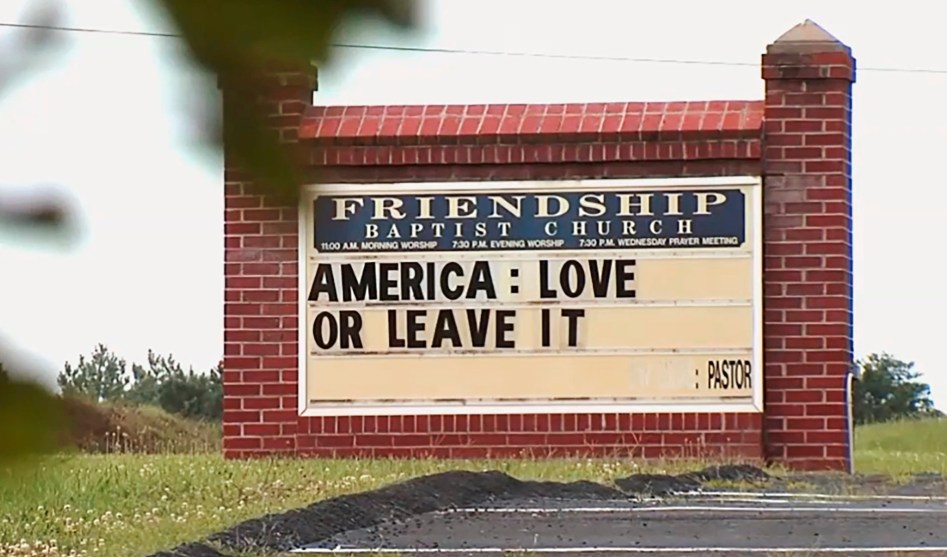
'It’s America—love it or leave it'


Seems it may be time to bring back the 1970's:


Mother Jones: 'In 1970, country singer Ernest Tubb was pissed off.


“Well, I’m getting mighty tired of seeing hippies run wild and burning down the schools and stepping on the flag,” he sorta-sings, mostly-rants. Tubb’s song crescendoes with the chorus: “It’s America—love it or leave it.” '    

 Love it or leave it


Wednesday, August 31, 2022

D O J Answers in New Filing


See the entire document here.      Copy and paste the link:

https://drive.google.com/file/d/1nxJHlu3jqN5njXLM8J8QTrzRsiE4M_p1/view

Saturday, August 20, 2022

Without Fear or Favor


I am grateful to live where no man is above the law. Merrick Garland and the DOJ will follow the law where the facts lead. If they find a person has committed a crime, they will prosecute the person. And, if a jury finds the accused party guilty, he will serve a prison sentence. 


As Charles Linehan put it: 


There are some deluded folks who may demonstrate against lawful actions taken by law enforcement and who may also threaten the government officials carrying out the law. Threats against law officers are crimes. The folks making the threats will be prosecuted and, if found guilty, they will be sent to jail. 


There’s an old saying “if you can’t do the time, don’t do the crime “

Friday, July 22, 2022

U.S. considers giving Warthog warplanes to Ukraine and training its pilots.

 U.S. considers giving Warthog warplanes to Ukraine and training its pilots. — New York Times, Julian E. Barnes, July 22, 2022


U.S. Air Force leaders have raised the possibility of training Ukrainian pilots in the United States and giving Ukraine the American fleet of A-10 Warthog ground-attack planes — an idea that could solve a problem for both countries.


The notion is a classic trial balloon. Air Force Secretary Frank Kendall this week entertained the idea of giving the A-10 planes to Ukraine, while adding that it was still in the discussion phase.


Such a plan could make sense. Ukraine needs more air power and more ways to destroy Russian artillery and tanks, and the Warthog was designed during the Cold War for that very purpose.

And the Air Force has for years wanted to get rid of the A-10s. That would free up maintenance money for new planes that can be used for multiple purposes, and would be more effective in a possible conflict with China.


But Congress has blocked every attempt to retire the A-10.


Under the Obama administration, Defense Secretary Robert M. Gates tried to retire the plane, only to be opposed by Senator Kelly Ayotte, Republican of New Hampshire. Instead of retiring the A-10, Congress approved money to modernize and extend the life of the planes, a project that was completed in 2019.


Under Mr. Kendall, the Air Force has once again tried to retire the planes to save money to modernize the military. But the most recent attempt to mothball the Warthog was blocked by Senator Mark Kelly, Democrat of Arizona.


While designed to destroy Russian tanks, the Warthog was used in Iraq and Afghanistan to provide support for troops in combat. Air Force pilots would fly the Warthog slowly over the terrain and then open up with its guns on insurgent fighters.


Some former officials believe that in Ukraine the Warthog could perform a combination of that role and its original tank-killing mission. In recent months, those former officials have been working with Ukrainian and American officials to discuss the possibility of sending Ukraine at least some of the Air Force’s A-10 fleet.


For now, though, any plan to ship Warthogs to Ukraine remains only a suggestion.


But there are some indications that sending the planes to Ukraine could appeal to some lawmakers. The House version of the annual defense policy bill would authorize the United States to train Ukrainian pilots on American planes.


Wednesday, July 20, 2022

2024: Count ALL the Votes


trump may succeed in violently attacking several state election systems and processes so that the Electors cannot certify the election of a new President.


Al Gore in that situation deferred to the Supreme Court and did not contest the election of Bush.


Joe Biden CANNOT follow that lead. We want him to stay President until the votes are counted and certified. 


Be sure to count ALL the votes, even if it takes a year. 


If we hand the country to trump, he will never leave. The rule of law will become an archaic memory. 


Tuesday, July 19, 2022

Can a U.S. president or candidate face criminal charges?


I read the law this way: trump is a private citizen and can be prosecuted now for any crimes he may have committed in or out of office. 


The idea that he can escape prosecution in the event he is a candidate for President in 2024 is simply absurd.


No person is above the law.


The United States of America faces severe negative consequences if we fail to indict trump for all criminal activities - such a failure may well let loose a cascade of violence and intimidation that can end the rule of law in the United States.


We should appoint a Special Prosecutor in the event the Attorney General cannot prosecute him expeditiously. Any delay encourages violence from his supporters.


Delaying prosecution sends the wrong message. Now is the time to act.


'Can a sitting U.S. president face criminal charges?'


By Jan Wolfe, Reuters, FEBRUARY 26, 2019


https://www.reuters.com/article/us-usa-trump-russia-indictment-explainer/can-a-sitting-u-s-president-face-criminal-charges-idUSKCN1QF1D3


'COULD TRUMP BE REMOVED FROM OFFICE AND THEN PROSECUTED? 


Yes. There is no debate over whether a former president can be indicted for conduct that occurred while in office. In fact, President Gerald Ford, who succeeded Nixon after his resignation, was mindful of this when he granted “a full, free, and absolute pardon unto Richard Nixon for all offenses against the United States which he, Richard Nixon, has committed or may have committed.” '


[WHAT ABOUT NOW?]


'...some lawyers have argued that the nation’s founders could have included a provision in the Constitution shielding the president from prosecution, but did not do so, suggesting an indictment would be permissible. According to this view, immunity for the president violates the fundamental principle that nobody is above the law....'


COULD MUELLER [HAVE INDICTED] ...TRUMP DESPITE THE EXISTING POLICY?


'Possibly. The Justice Department regulations governing Mueller’s appointment allow him to deviate from department policy in “extraordinary circumstances” with the approval of the U.S. attorney general, the nation’s top law enforcement official. Trump appointee William Barr currently holds that post.


Some legal experts have suggested Mueller could invoke this exception if he has uncovered serious wrongdoing and lacked confidence in the ability of the divided Congress to hold Trump accountable. Some lawyers also have said Mueller is not bound by the 1973 and 2000 memos because he is not a typical employee of the department.


Ken Starr, who investigated President Bill Clinton in the 1990s in the somewhat different role of independent counsel, in 1998 conducted his own analysis of the question of whether a sitting president can be indicted, indicating he did not consider the 1973 Justice Department memo binding on him.


Starr did not indict Clinton in his investigation involving the president’s relationship with a White House intern named Monica Lewinsky, but lawyers in his office concluded he had the authority to do so, according to a once-secret internal memo made public by the New York Times in 2017.'


Monday, July 18, 2022

Radical USA Terrorists Will Attack Elections Violently


There is an 80% to 90% probability that domestic USA terrorists will violently attack State government facilities during both the 2022 AND 2024 elections.


They will likely attack two or three election vote counting locations and State capitol buildings. It may happen in States where Republican majorities control both houses of the State legislature.


The early attacks can serve as a test of the protective systems installed by the National Guard and Police. If protection is weak and attackers succeed  OR escape with few arrests and little physical harm, then terrorists may see that as a message: the US will not protect the rule of law against violence. Any such message can encourage more attacks.


The goal of these attacks will be to call into question the legitimacy of the election process and results.


That can be an excuse for overturning all elections and installing unelected officials in critical positions.


The USA should prepare to treat such attacks as acts of war.